The Marketer Who Owns Your AI's Context Is About to Outrank the One Who Writes the Prompts.
Anthropic just deleted 80% of its own AI's instructions with no loss in quality. The skill that replaces prompt-writing isn't typing better. It's owning what the model gets to see.
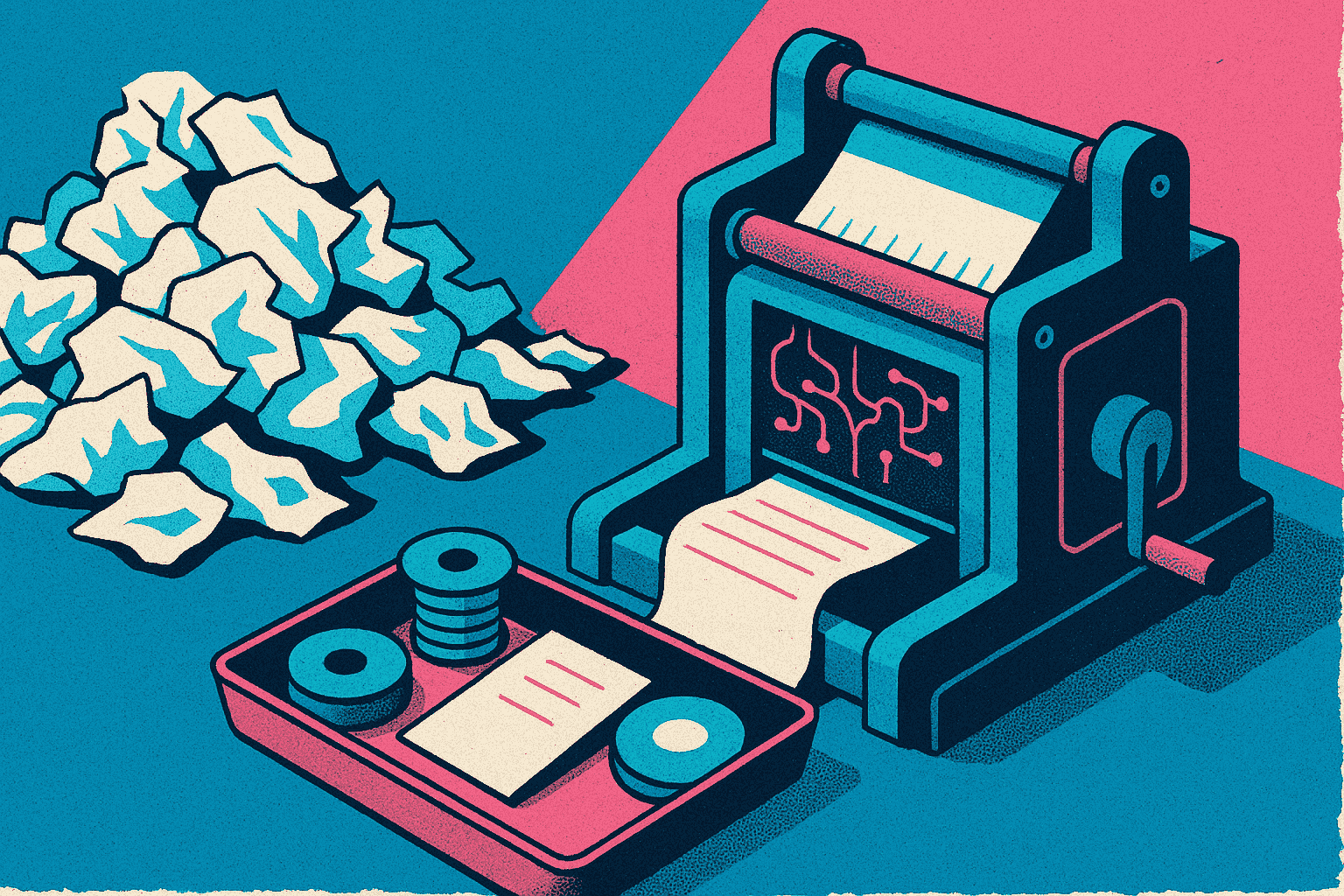
Anthropic removed over 80% of the standing instructions it feeds its own coding tool, the paragraphs a model reads before you type anything, and reported “no measurable loss on our coding evaluations.” It published the reasoning on July 24, in a post that read backward against two years of advice.
Less instruction, same result. The company that builds the model is telling users that piling on rules has become the mistake.
It calls the work that replaces all that scaffolding context engineering, and the shift it describes lands straight on marketing teams that spent the last two years learning to prompt.
Prompting is the sentence you type. Context is everything the model can see when it answers: your brand guidelines, your customer data, past campaigns, the examples of good work, the constraints on what it can’t say. Ana Mourão, a customer-data specialist writing in MarTech, drew the line that every marketer should sit with:
“Two marketers using the same AI tool with the same prompt will get dramatically different outputs if one feeds the AI clean customer segment data, historical campaign performance, brand voice examples and compliance constraints, while the other feeds it nothing but the prompt itself.”
Same tool, same prompt, opposite results. The variable isn’t the wording of the request. It’s what the model was given to work from, which Mourão defines as “deliberately designing what data, knowledge, tools, memory and structure are available to an AI system when it performs a task.”
That moves the skill to a different desk. A prompt is written by whoever is typing in the moment. Context is built and maintained ahead of time by someone who owns it. Pierre DeBois, writing in CMSWire, put the handoff cleanly:
“Prompt engineering lives in the hands of whoever is typing the query. Context engineering lives in the hands of whoever built and maintains the system that AI retrieves from.”
Which is why the marketer who quietly maintains the brand’s context is about to matter more than the one with the clever prompts. Stuart Brameld, founder of the marketing software firm Growth Method, has been saying it to operators for months:
“The teams seeing real returns from AI aren’t writing better prompts. They’re building better context.”
We’ve made a version of this argument before, when a new frontier model started shipping every 11 days: the durable thing a team should invest in is its own written-down process and data, not mastery of a tool that will churn. Anthropic’s post adds the part that stings: more is not the goal. The old craft was stuffing the model with rules and worked examples. The new one is deciding what to leave out so the model’s own judgment has room, then feeding it a small, clean set of the things it can’t guess: who the customer is, what the brand sounds like, what it’s not allowed to claim. Curating that is harder than writing a long prompt, and it doesn’t look like typing.
The mechanism is a capability change. Earlier models needed heavy hand-holding, so long instructions and many examples helped. The newer ones reason well enough that rigid rules box them in, and the marginal instruction starts subtracting quality instead of adding it. So the value moved off the prompt and onto the source material, and the source material is an asset a person has to build, own, and keep current. Mourão names the stakes for the org chart: “What determines value is context. Specifically, who builds it, who owns it and whether the marketers closest to the business are the ones making those decisions.”
For a small marketing team, that’s a hiring and a defense question at once. The person worth keeping isn’t the one with the prompt library; it’s the one who owns the brand’s context layer, the same instinct behind the ops teams finding that the job that survives automation is the judgment work, not the production. Stop running prompt-writing workshops. Put one owner on the context: the brand-voice file, the customer-data feed, the examples of work you’d sign your name to, kept clean and current. The prompt is a skill anyone picks up in an afternoon. The context is the part competitors can’t copy, and the model just told you it’s the part that counts.
Quoted in this story
- Ana Mourão, Martech, CRM and Customer Data Professional, MarTech (source)
- Pierre DeBois, Contributor, CMSWire (source)
- Stuart Brameld, Founder, Growth Method (source)
Want your perspective in coverage like this? Get quoted.
Sources
This story is part of our running coverage: the full picture →
Get Net Effect.
The net effect of AI on your marketing: the stories that matter, twice a week, in five minutes.