Encore Raised $30M to Bottle Your Best Closer. Every Customer Call Is Now Training Data.
Encore AI raised a $30 million Series A to mine sales and service calls for what works, then hand those playbooks to AI agents. The move puts a price on the tacit skill your best people carry.

Encore AI raised a $30 million Series A on July 29, led by the venture firm Team8. The pitch behind the round is worth sitting with, because it prices something marketing and sales teams have never put on a balance sheet: the tacit skill of your best people.
The Tel Aviv company, founded in 2022 as Insait, records the calls, emails, and texts between a company’s staff and its customers, connects them to the CRM, and breaks each interaction into stages to work out which moves advanced the deal and which stalled it. The winning moves become playbooks. The playbooks train AI agents that can run the interaction themselves or coach a human through it live.
CEO Dvir Ginzburg describes the input plainly.
“We focus on every interaction a customer has with an organization. We analyze how service representatives perform those interactions today and use that knowledge to create AI agents that deliver a better customer experience.”
The company says annual recurring revenue has grown fivefold since its seed round less than 18 months ago, with more than 40 enterprise customers, most of them financial institutions. Several of those customers, including Bank Leumi and the insurer Harel, came on as investors after seeing the results on their own operations.
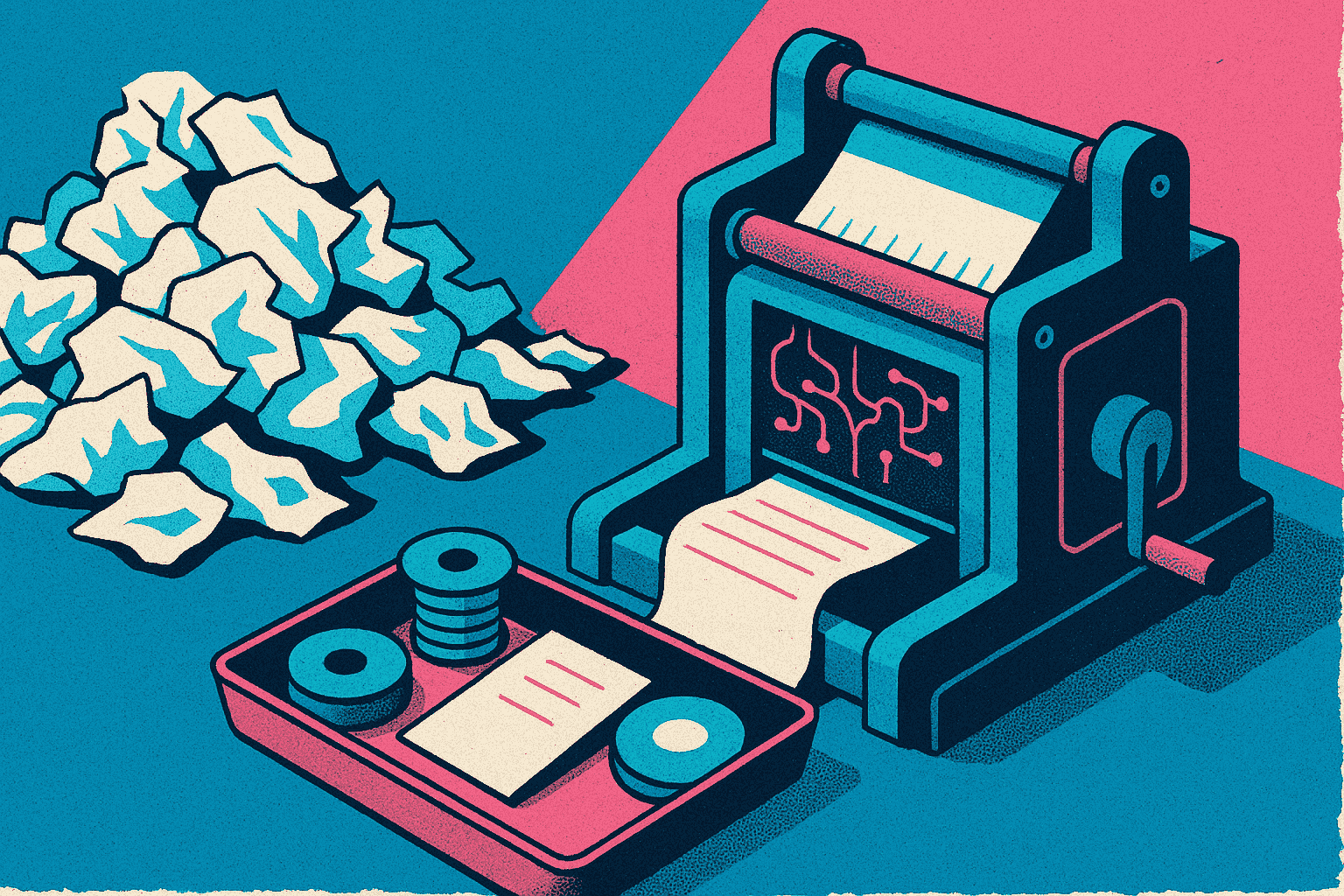
Here’s the pattern that makes this more than a funding note. For years, the knowledge of how your top closer actually closes lived only in their head. It walked out the door when they quit. Encore’s bet is that the knowledge can be extracted from the raw call logs, stripped from the person, and installed in software. An agent, in this context, is a piece of software that carries out a whole task on its own, not just answers a question. What’s being bottled isn’t the script. It’s the judgment.
That reframes a role that felt safe. The consensus comfort has been that AI takes the grunt work, list-building and note-taking, while the human keeps the relationship and the read. Encore is aimed straight at the read. It studies the exact conversational turns a great rep makes, then makes them repeatable by anyone, or by no one.
It rhymes with a shift we keep documenting. When companies automate the marketing production line, the surviving job turns out to be checking the machine’s output. When they deploy agents, someone still pays a running tax to keep them working. And when firms claim AI “replaced” a role, the work usually just gets redistributed onto whoever’s left. Bottling the closer follows the same arc: the skill doesn’t vanish, it moves, and the person who owned it has to find the rung above it.
Not everyone reads that as loss. Jennifer Pockell Dimas, Chief Marketing and Experience Officer at Telarus, sees the upside of turning dead playbooks into living training.
“Our teams spend so much energy creating sales playbooks, selling assets and competitive battlecards. Then they live in a folder somewhere.”
Her point is that most of this knowledge already rots in a shared drive nobody opens. If the same material becomes a system that coaches reps in real time, that’s a real return on work already done. The optimistic version of Encore makes the average rep perform closer to the best one, in their first week instead of their third year.
Both readings can be true, and which one you get depends on how the tool is pointed. Ginzburg is explicit that Encore is built to lift revenue from each interaction, not to deflect customers away from humans the way most support bots do. Used that way, it’s a coach. Used another way, it’s a case for a smaller team that hits the same number. The technology doesn’t decide which. The budget owner does.
The mechanism underneath is a familiar supply shock. What used to be scarce, a person who instinctively knows how to move a hesitant buyer, gets captured, copied, and distributed at software cost. When a scarce input goes abundant, its price falls and value shifts to whatever stays scarce beside it. In this case, that’s two things: the taste to decide which conversations the agent should learn from, and the accountability for what it says when it’s live in front of a customer.
So if you run a revenue or marketing team, three moves follow from this round.
- Write down what your best people do, before a vendor does it for you. The company that captures its own winning patterns owns that asset. The one that waits rents it back from whoever recorded the calls first.
- Decide, in writing, whether the agent coaches or replaces. That choice sets your headcount plan, your training budget, and your culture. Drifting into it by default is how you wake up understaffed and off-brand.
- Pay for the judgment, not the transcript. The scarce skill is now choosing the right exemplars and standing behind the agent’s output. Staff and price that seat like it’s the one that matters, because it is.
Encore just proved investors will pay $30 million to turn your team’s best instincts into a product. The question for every team it sells to is whether that product makes your people more valuable or merely more optional. You still get to decide which. For now.
Quoted in this story
- Dvir Ginzburg, CEO and Co-Founder, Encore AI (source)
- Jennifer Pockell Dimas, Chief Marketing & Experience Officer, Telarus (source)
Want your perspective in coverage like this? Get quoted.
Sources
This story is part of our running coverage: the full picture →
Get Net Effect.
The net effect of AI on your marketing: the stories that matter, twice a week, in five minutes.