Time Built a Version of Its Site for Bots, and Ally Bank Just Bought an Ad on It
Time stripped its pages down to plain text so AI systems could read them, then started selling sponsored blocks inside. Ally Bank and the Project Management Institute are among the first buyers.
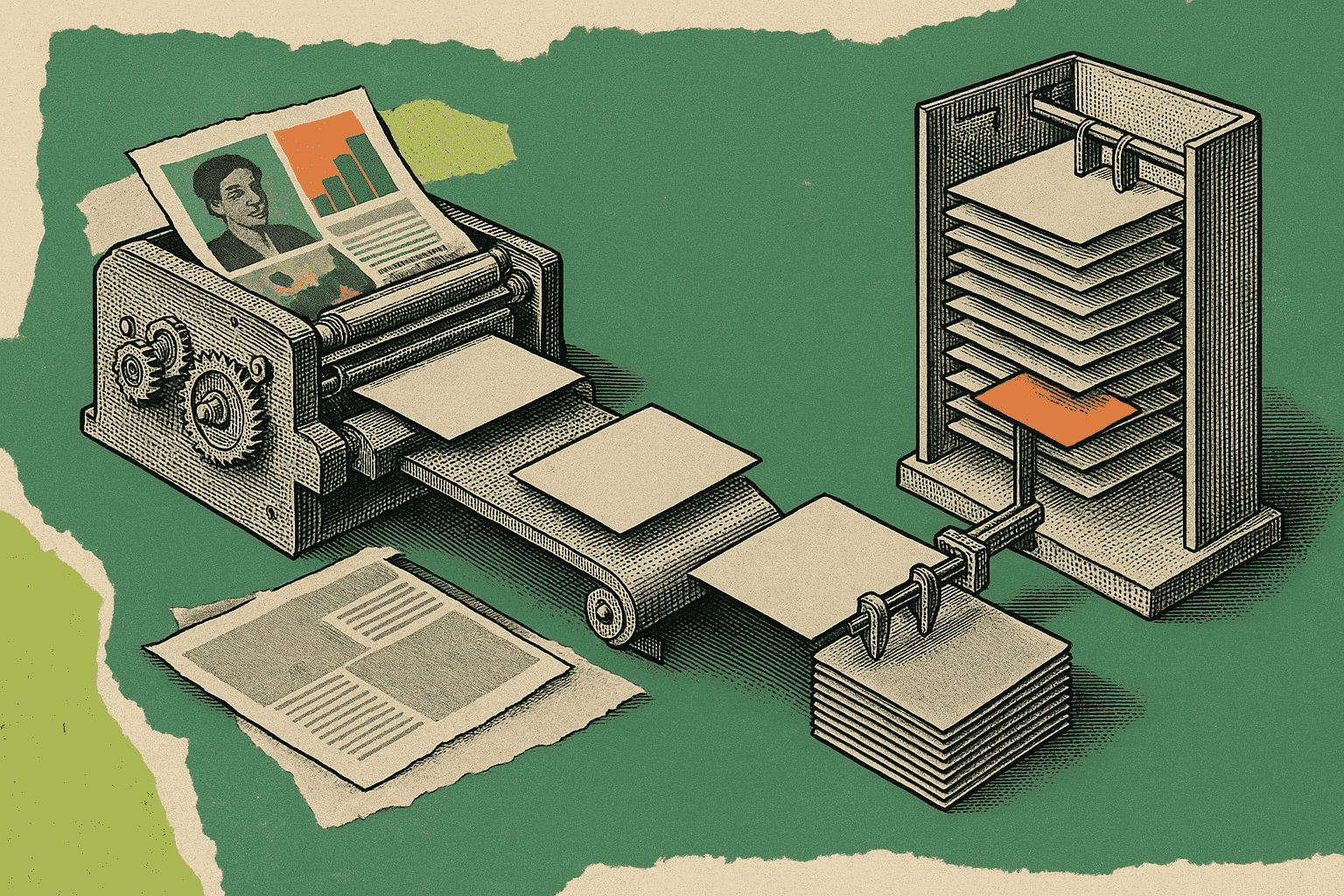
About 15% of brands now run their own markdown pages, stripped-down text copies of a webpage built for machines rather than people. That figure comes from Mobian, the ad tech company that just helped Time turn its own markdown pages into ad inventory. Digiday reported on July 30 that Ally Bank and the Project Management Institute are among the first advertisers to buy.
The ads are formatted as FAQs carrying a brand’s information and messaging. They’re labeled as sponsored content. Time charges premium rates and runs one agent ad per markdown file. The intended reader is an AI system.
Jonah Goodhart, Mobian’s co-founder and CEO, framed the appeal in terms of scale rather than reach.
“When you influence ChatGPT, you’re influencing potentially all of ChatGPT.”
That sentence is the whole pitch, and it describes a different transaction than display advertising. A banner buys attention from one person at a time. This buys a line in the answer a model gives everyone who asks.
Time has been rebuilding for this audience for a while. The company converted its pages to markdown last month, which we covered in our piece on publishers rebuilding the web for agents. The logic was cost: markdown drops the design, images, and styling that a browser needs and a language model doesn’t. Cloudflare’s product VP Will Allen put the difference at roughly three tokens versus 12 to 15 for a simple “About Us” heading. Tokens are the units AI companies pay for, so cheaper pages get read more.
What’s new is that the cheap pages now carry a rate card.
The inventory nobody was counting
Time sees more bot traffic than human traffic on most days, and Cloudflare puts bots at more than half of all web traffic overall. Those visits produced nothing. No impression, no viewability, no line on a media plan. A publisher watching its human audience decouple from its revenue was watching the larger half of its traffic generate zero.
Mark Howard, Time’s chief operating officer, treats it as an inventory problem with a familiar shape.
“This is an obvious extension of list sponsorship or franchise sponsorship, because we do know that there is a spike of the agents coming.”
He’s right that the sales motion is familiar. The measurement isn’t. Mobian tracks visibility, favorability, and accuracy scores over time by querying AI search engines, which is a reasonable proxy and nothing like an impression count. Asked what advertisers should expect to measure, Howard was direct about the gap.
“We don’t know yet because this is brand new, and we believe that we are paving the first path forward here.”
That’s an honest answer, and it should tell you how early this is. Ally Bank is buying a placement whose performance nobody can yet define. The publisher says so out loud.
Why Time and not someone else
The two companies have history. Mobian’s contextual analysis was the tool Time and Newsweek used when they pushed back on brand-safety blocklists in early 2025, the era when a Taylor Swift article got flagged because it contained the word “feminist.” Goodhart’s argument then was that the old keyword tools were broken and needed to be replaced with something that could read context. The agent-ad product is the same argument pointed forward: if models are going to form opinions about brands from whatever text they can reach, a brand should supply the text.
“The big idea here is LLMs and AI want trusted information about brands. We’re serving that up to them in a very straightforward, easy way.”
The counter-case arrived in the same article. Rob Derow, a managing director at BCG X, raised the risk that language models could come to treat these sponsored blocks as cloaking. Cloaking is the old SEO practice of showing crawlers something different from what humans see, and it gets penalized. Nobody knows yet where the model providers will land on it. The sponsored labeling is voluntary, because no policy requires it.
So the product depends on a judgment call that only four or five companies can make. OpenAI, Anthropic, and Google haven’t made it.
What this means if you buy media
Set Time aside for a moment. The transferable part is that a new inventory type just got priced, and the pricing arrived before the measurement, the standards, and the platform rules. Ad tech does this routinely. It’s usually where early buyers get either an unrepeatable advantage or a write-off.
Three things worth doing with that:
- Ask what you’d be optimizing. If a vendor sells you agent-facing placements, the deliverable is a change in what models say about you, not clicks. Get the baseline measured before the campaign, or you’ll have no way to argue the spend worked.
- Check your own markdown pages first. Roughly 85% of brands don’t have any. That’s free ground compared with renting space in a publisher’s, and it’s the same mechanism we described in the fight over AI visibility.
- Treat the cloaking question as live. Ask any vendor, in writing, what happens to your campaign if a major model provider decides sponsored text in machine-readable pages violates its guidelines.
Time is doing something reasonable here: it found a way to charge for traffic that was costing it money and returning nothing. Whether it’s an advertising channel or a footnote depends entirely on decisions being made inside four or five AI companies that haven’t announced them yet. Buy accordingly.
Quoted in this story
- Jonah Goodhart, Co-founder and CEO, Mobian (source)
- Mark Howard, Chief Operating Officer, Time (source)
Want your perspective in coverage like this? Get quoted.
Sources
This story is part of our running coverage: the full picture →
Get Net Effect.
The net effect of AI on your marketing: the stories that matter, twice a week, in five minutes.