A New Frontier AI Model Ships Every 11 Days. Stop Building Your Marketing Around Any One of Them.
Seven frontier models shipped in 78 days and one got pulled 13 days after launch. The safe move now is making your marketing work portable across any model, not standardizing on one.
On June 9, Anthropic shipped Claude Fable 5, the most capable model it had ever released to the public. Thirteen days later it was gone, pulled from general availability on June 22 under a US export directive.
Fable 5 wasn’t an outlier. The churn is the texture of 2026. Seven frontier models shipped from the three leading labs in a single 78-day stretch this spring, roughly one every 11 days. Claude Opus 4.7 landed on April 16, GPT-5.5 on April 23, DeepSeek V4 on April 24: three new frontier models inside eight days. One tracker put the acceleration in plain numbers. In 2024 the industry saw three or four major model releases a year. In 2026 it sees that many a month.
For a marketing team that spent last quarter standardizing on one of them, that pace is a problem.
On July 9, the Marketing AI Institute made the problem explicit. In a post titled “Protecting Your Work as AI Models Rapidly Come and Go,” the firm argued that the churn has quietly become a planning question, and that the usual response, picking the current best model and building around it, is the wrong one. Mike Kaput, the institute’s chief content officer, put the fix in one line:
“stop investing all of your energy in mastering a tool, and start investing in making your work legible to any capable model”
Whatever you standardize on, it can’t be the model. The model won’t be there next quarter.
Kaput’s argument is that the frontier models have converged enough to swap for one another. “Frontier models are becoming interchangeable: ChatGPT, Claude, Gemini,” he wrote, and the difference that’s left has moved off the model and onto what you feed it. Matthew Diakonov, founder of the AI startup Fazm, made the same case from the engineering side. The models turn over constantly, he wrote, but one thing doesn’t:
“The thing that does not churn is the layer around the model: your chats, your forks, your accumulated context, the tools the agent can reach.”
The reason churn hurts is mechanical. When a team masters one model, it isn’t just learning a chatbot. It’s tuning prompts to that model’s quirks, wiring its standard procedures to one vendor’s format, training the team’s habits on one interface. Every one of those investments is model-specific, meaning it holds value only as long as that exact model stays available at that exact price. Then a better model ships, or the one you use gets pulled, or the pricing flips from a flat monthly fee to metered per-use billing, and the work you did to master the old one doesn’t carry over. You start again. Churn turns your learning curve into a treadmill.
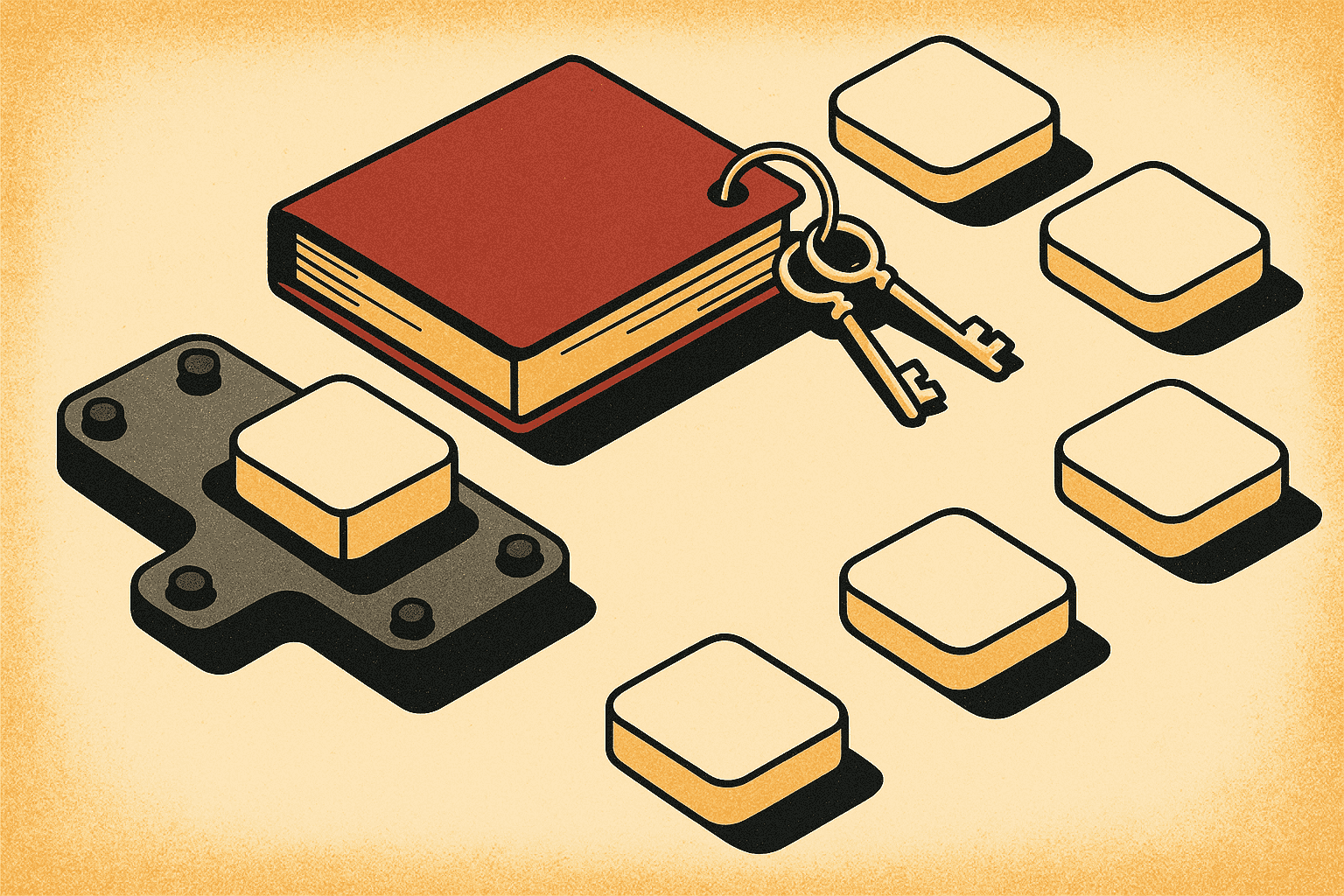
So the thing to standardize on is the part that survives a model swap. The Marketing AI Institute calls it portable context: your process written down so any capable model can pick it up, not saved settings locked inside one tool. It lays out three layers a small team can actually build. A “read me first” document that orients any AI tool to how your company works. A folder of plain-language playbooks for the tasks you run over and over. And a data layer, a set of files or records the model gets safe, read-only access to so it has the facts it needs to do the job. None of that is tied to a vendor. Point it at whatever model is best and cheapest this week, then point it at a different one next week when that changes.
The same lesson is arriving from a few directions at once. It’s why standalone AI tools keep turning into features of the platforms you already pay for, and why the martech stack is consolidating rather than sprawling. The tool layer is the volatile layer. When OpenAI cut frontier prices again with GPT-5.6 on that same July day, the takeaway wasn’t to re-standardize on the new cheap tier. That tier will change again too, and the team positioned to profit is the one that can move its work over without a rebuild.
For a five-person marketing team, the practical version is small and boring. Write your process down in plain language instead of trapping it in one tool’s saved prompts. Keep your best examples and brand rules in a document you own, not in a vendor’s memory feature. When you evaluate a new model, you’re testing whether your existing playbooks run on it, not relearning the craft from scratch.
Don’t standardize on a model. Standardize on the context that makes any model useful, and treat the model itself as the part you expect to replace. The releases will keep coming every couple of weeks. The team that wrote its work down is the one that gets to shrug each time.
Quoted in this story
- Mike Kaput, Chief Content Officer, Marketing AI Institute (source)
- Matthew Diakonov, Founder, Fazm (source)
Want your perspective in coverage like this? Get quoted.
Sources
This story is part of our running coverage: the full picture →
Get Net Effect.
The net effect of AI on your marketing: the stories that matter, twice a week, in five minutes.