Only 11% of Companies Replaced Marketers With AI. The Rest Just Gave Them a Second Job.
A new Content Marketing Institute survey finds 76% of marketers now do more than one job, half of them without a raise. Only 11% of companies actually replaced anyone with AI.
The number that should worry anyone running a marketing team showed up in a report almost nobody read. On April 8, the Content Marketing Institute published its 2026 Career and Salary Outlook, a survey of more than 600 marketers. 76% of them said they’re now doing the work of more than one job.
Half took on that extra work with no promotion and no raise.
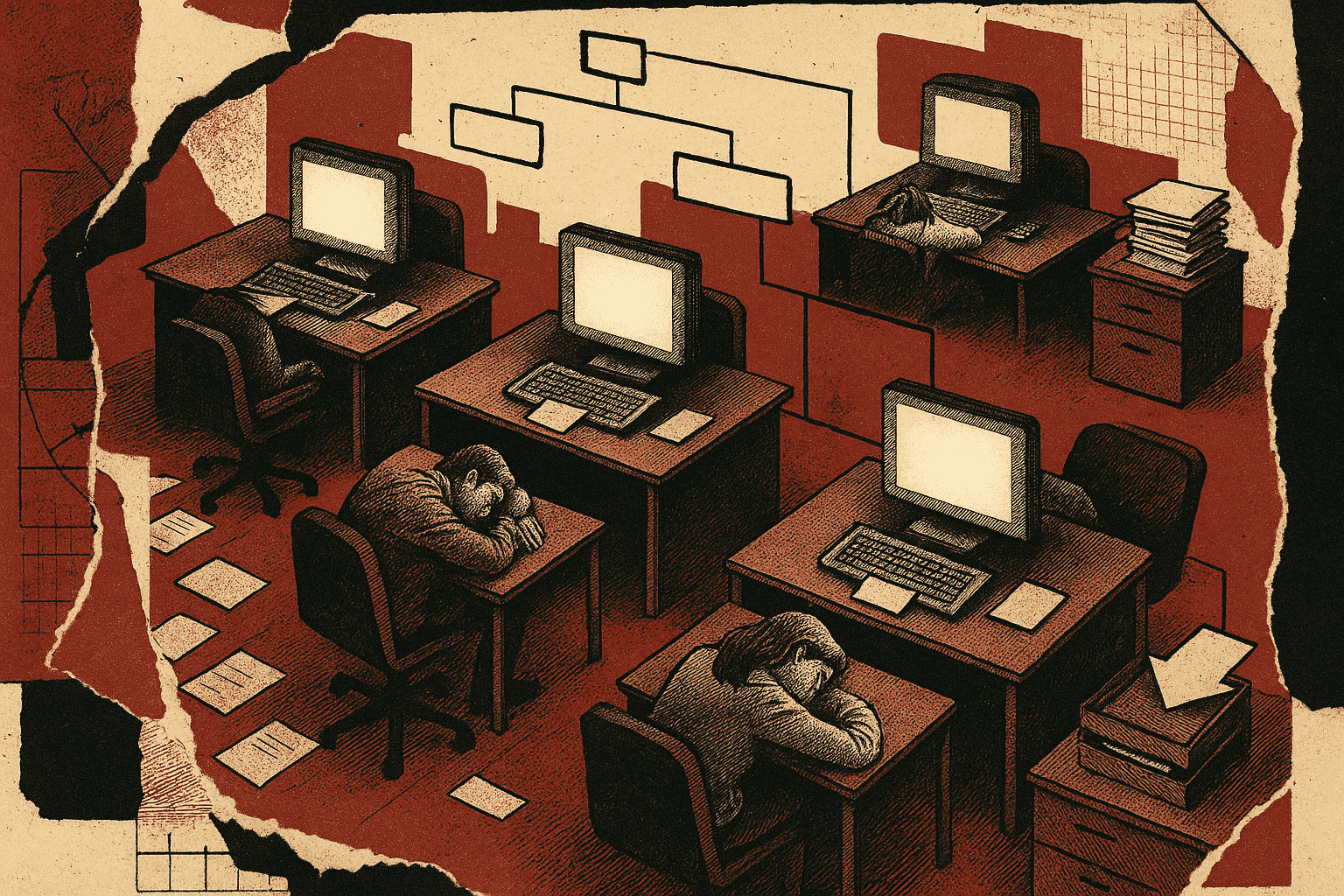
The institute gave the pattern a name: the ghost workforce. It’s the invisible labor pool of marketers quietly covering two or three roles at once, while the org chart pretends nothing changed.
“CMI’s 2026 Career and Salary Outlook reveals the quiet redistribution of work happening under the cover of AI efficiency claims,” said Stephanie Stahl, the institute’s managing director.
The efficiency story leaves out one number. Only 11% of organizations in the survey actually replaced a worker with AI. The layoff, the thing marketers have braced for since 2023, mostly didn’t come. Nearly nine in ten companies kept their people and handed them the extra work instead.
That’s the real mechanism, and it’s easy to miss because it never generates a press release. A person leaves and isn’t backfilled. A req sits open for two quarters. A reorg folds three responsibilities into two. Each move is small. AI absorbs the guilt, because “we’re more efficient now” is a cleaner internal story than “we’re understaffed and hoping nobody quits.”
The work still has to happen. So it lands on whoever’s still at the desk.
You can see the shape of the redistribution in what marketers actually spend their days on. In research cited in the institute’s mid-year reality check, 37.9% of marketers said they now focus primarily on coordination rather than creative or strategic output. Another 41.8% described their role as “50/50 creative on a good day.” The job didn’t get automated away. It got heavier and more administrative, one absorbed task at a time.
Robert Rose, the institute’s chief strategy advisor, argues the whole “augment or replace” debate has been the wrong frame. The question leaders skipped, he wrote, is “What work deserves our time? Should AI help us do it deeper or faster?” Most teams answered faster by default, and faster without more people is just more.
This is where the ghost workforce connects to the two trends we’ve already covered. When entry-level marketing hiring dries up, there’s no junior to hand the execution work to, so a senior does it on top of their own. When teams shrink through attrition instead of layoffs, the headcount chart stays flat enough to avoid scrutiny while the load per person climbs. The survey’s own data confirms the composition: entry-level hiring is down, and hiring growth is concentrated among more experienced marketers who can supervise AI output rather than produce the first draft.
So the survivors aren’t just doing more. They’re doing more of the wrong kind of work: the coordination and cleanup that AI generates rather than eliminates. And there’s no one below them to delegate it to.
Stahl put the human cost plainly.
“AI promised to free up time for marketers to focus on higher-value work. Instead, marketers report feeling overworked and underappreciated, as they’re expected to adapt to the furious pace of change, often without adequate training and support.”
The strategic risk for any company running this playbook is that it looks free and isn’t. Compression that shows up as “AI productivity” this year shows up as turnover next year. And the people most likely to leave are the experienced marketers the same survey says are now the hardest to hire. You save a salary and lose the institutional memory that made the team fast in the first place. It’s the same quiet math that’s been shortening CMO tenures: a cost cut that reads as a win until the bill arrives.
If you lead a marketing team, three checks are worth running before the next planning cycle.
First, count the jobs per person, not the people. If a role description has silently grown to cover two former positions, you don’t have an efficient team. You have an attrition risk wearing an efficiency label.
Second, price the AI “savings” against retention. Before you leave a req open another quarter, put a number on what it costs to replace the senior marketer who’s currently absorbing it.
Third, decide what work to stop doing. Rose’s point is the one most teams skip: AI is very good at accelerating work that shouldn’t exist. The fastest way to un-double a job is to kill the tasks that were only ever busywork.
The marketing layoff got the headlines. The ghost workforce is the story that actually changed the job, and it did it without anyone having to announce a thing.
Quoted in this story
- Stephanie Stahl, Managing Director, Content Marketing Institute (source)
- Robert Rose, Chief Strategy Advisor, Content Marketing Institute (source)
Want your perspective in coverage like this? Get quoted.
Sources
- Content Marketing Institute: An AI-Driven Ghost Workforce Rises in 2026 Marketing Job Market
- Content Marketing Institute: The Mid-Year AI Reality Check for Every Marketing Team
- The National Law Review: A Ghost Workforce Rises in the 2026 Marketing Job Market (and Other AI-Driven Shifts)
This story is part of our running coverage: the full picture →
Get Net Effect.
The net effect of AI on your marketing: the stories that matter, twice a week, in five minutes.