Newsweek Lost 77 Million Readers and Is Having Its Biggest Year Since 2012. The Growth Came From a Healthcare Ad Platform.
Newsweek's audience collapsed and its revenue is at a record. The money is coming from a demand-side platform, events, and rankings, while the publishing division shrinks.
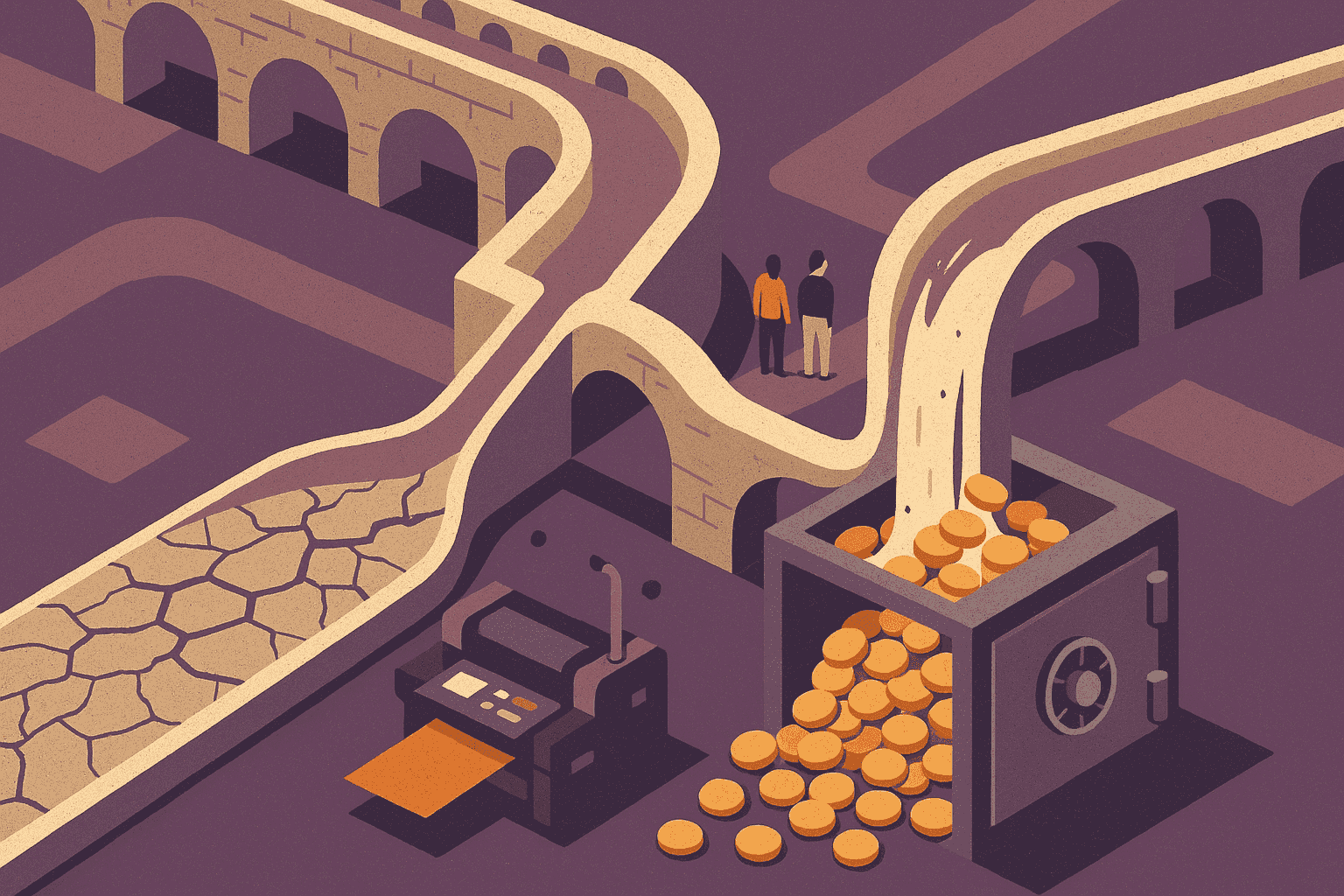
Newsweek’s monthly readership fell from 100 million in May 2025 to 23 million last month, according to Similarweb data reported by Adweek. That’s 77 million people gone in about a year. In the same stretch, the company is on pace to clear $100 million in revenue for the first time since 2012.
Dev Pragad, Newsweek’s CEO, didn’t pretend the first number was painless:
“When [traffic declines] come, they really are unpleasant. Despite that, this year will be our highest revenue ever.”
Most people will read that as proof that traffic stopped mattering. Read the revenue line instead.
The single largest driver of Newsweek’s growth is AdPrime, a healthcare-focused demand-side platform the company bought in June 2025. It’s pacing to more than triple its revenue this year, from $14.8 million to north of $40 million, at a profit margin above 10%. In its first full year it will account for roughly 40% of all company revenue. The rest of the growth sits in Nexus, the rankings and events operation, where rankings are up about 15% and events are growing 40% to 50%.
Newsweek’s publishing division, the part that makes the journalism, is expected to shrink 20% to 25% this year.
So the company didn’t find a way to make a collapsing audience pay. It bought an ad-tech business that never needed the audience in the first place. A healthcare DSP buys ads across the whole internet on behalf of healthcare marketers. It doesn’t care whether anyone visits Newsweek.com, and that indifference is the entire point.
That’s the part worth sitting with. Traffic didn’t turn optional here. Newsweek had a balance sheet big enough to go buy a different business, and the pivot everyone will cite as media resilience is really an acquisition.
Ask an operator without that option. Scott Lapatine, who founded the music site Stereogum, announced a subscription relaunch last November with an unusually blunt accounting:
“starting this year the so-called ‘media traffic apocalypse’ caused by Google’s pivot to AI search has cut our ad revenue by 70%”
He named the culprit precisely, and refused the easy scapegoats:
“Facebook and X’s deprioritization of links hurt too, but I can’t downplay the brutal impact of AI Overview”
Stereogum’s answer wasn’t a DSP. It was a request. “Advertising still accounts for the vast majority of Stereogum’s revenue,” Lapatine wrote. “But we need more of you to pay to sustain this operation.” Same disease, same year, and the treatment available to you depends entirely on what you can afford to buy.
The industry backdrop makes both stories look less like company news and more like weather. Chartbeat data in the Reuters Institute’s trends report shows Google search referrals to publishers down 33% globally in the year to November 2025, and down 38% in the U.S. Nic Newman, the report’s author, described the new competition plainly: publishers now face “AI answer engines and next generation browsers that are able to summarise and remix content in a way that provides great utility for audiences.” Publishers surveyed expect traffic to fall another 43% on average over three years. About a fifth expect to lose more than 75%.
Newsweek is not an outlier in the decline. Business Insider’s organic search traffic fell 55% between April 2022 and April 2025 before it cut 21% of staff. HuffPost lost half its search referrals. Newsweek is an outlier in one thing only: it had $100 million reasons to go shopping before the bill came due.
Here’s the mechanism, and it’s not complicated. Google answers the question on the results page, so the visit never happens. Every business that priced itself on those visits reprices at once. A publisher can respond by owning something the click never controlled, which means subscriptions, events, first-party data, or in Newsweek’s case a completely separate ad-tech company. Everything else is a slower version of the same decline.
Marketing teams should recognize this as their own problem in someone else’s clothes. If your content program is graded on sessions, you’re running the publishing division Newsweek is quietly shrinking. The traffic you report on is a rented signal that Google can revoke without a meeting, which is exactly the pressure already rewriting how SEO gets measured and why publishers are rebuilding their sites for machines. The durable version of this is the moat line, not the rent line: the audience you can reach without permission, across everything AI is doing to content and brand.
Newsweek’s record year is a real achievement and a terrible template. Almost no marketing team can acquire its way out of an audience problem, and the ones reading this definitely can’t buy a healthcare DSP. What they can copy is the sequence: Pragad saw the click stop being an asset and moved the company’s revenue onto ground he owned before he had to. Do the small version now. Count the people who’d still hear from you if Google went dark tomorrow, and if that number embarrasses you, that’s the budget line for next quarter. The era of borrowed audiences didn’t end for Newsweek. Newsweek just paid $100 million worth of attention to the exits first.
Quoted in this story
- Dev Pragad, Chief Executive Officer, Newsweek (source)
- Scott Lapatine, Founder, Stereogum (source)
- Nic Newman, Senior Research Associate, Reuters Institute for the Study of Journalism (source)
Want your perspective in coverage like this? Get quoted.
Sources
This story is part of our running coverage: the full picture →
Get Net Effect.
The net effect of AI on your marketing: the stories that matter, twice a week, in five minutes.