Profound Built an Agent to Run Your Marketing End to End. It Also Runs a Meter.
Profound's Aim agent watches your brand across AI assistants around the clock, then drafts and routes the work. Always-on is the pitch. It's also a meter: agentic tasks can cost 30x a chatbot's.
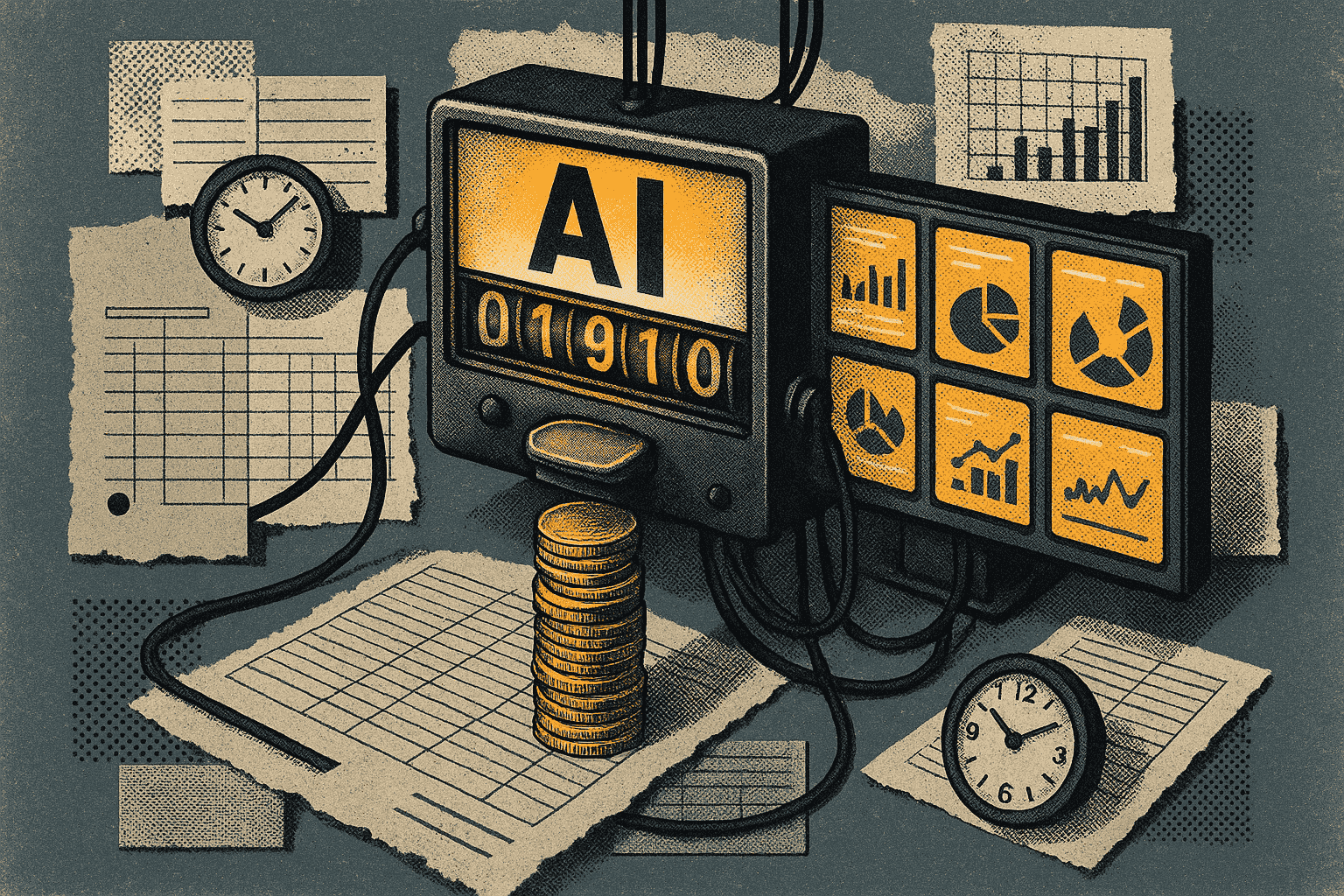
Profound spent the last year selling marketers a way to see how AI assistants describe their brand. This week it started selling a way to act on it without them. On July 2, the AI-search startup launched Aim, an always-on agent it pitches as running marketing “end to end”. Aim watches a brand’s citations and sentiment across assistants like ChatGPT and Claude, and when something shifts, it writes a memo, spins up a project, and routes the work to other agents to execute.
James Cadwallader, Profound’s co-founder and CEO, pitched it as the end of dashboard fatigue:
“Marketing teams don’t need another dashboard. They need to know what to do next.”
The company raised a $35 million Series B led by Sequoia last August to build exactly this. What it shipped is a marketer that never clocks out, which also makes it a compute bill that never stops running.
What Aim does, and why people want it
Per Profound’s launch materials, Aim monitors visibility, sentiment, and accuracy across AI answers, prompt volumes, and agent traffic. It flags the highest-impact openings, explains what changed and why it matters in a memo, converts each into a project with briefs and tasks, and hands execution to specialized Profound agents while the marketer supervises. Then it measures the result and adjusts.
The demand is real. Sarah Shaffer, an organic growth manager at the fintech Plaid and an early user, said the output earns its keep:
“The projects Aim surfaces are literally gold. They are perfectly aligned to what we’re trying to accomplish.”
So the product works and the buyers are lining up. The economics underneath are the part nobody puts on the slide.
The pricing model quietly flipped
Software used to cost a fixed price per seat. Agents cost whatever they consume. EY’s June analysis of agentic AI costs names the change directly:
“Agentic AI is shifting enterprise AI from fixed software/labor costs to variable compute use, where token costs are only part of the total cost.”
The numbers behind that sentence are steep. EY pegged a 2023-style chatbot exchange at about four cents and a 2026 orchestrated agent interaction at roughly $1.20, close to 30 times more, because the agent makes many model calls, pulls in outside context, and loops until it’s done. An always-on agent then multiplies that by time. Aim, by design, “works in the background, constantly looking for the moments that matter,” as Cadwallader described it. Every hour it watches is an hour on the meter.
That collides with the one question finance already asks about AI marketing spend: what did it return? A dashboard carries a knowable annual price. An autonomous agent that researches, drafts, and executes on its own initiative carries a bill that depends on how busy it decides to be, and a number you can’t forecast is a hard one to defend in a budget review. Gartner, cited in the same EY analysis, predicts 40% of agentic AI projects will be canceled by the end of 2027 on escalating costs, unclear value, or weak controls.
None of that makes Aim a bad buy. Profound is built for a genuine shift: as discovery moves inside AI answers, someone has to watch the brand there, and doing it by hand doesn’t scale. But the CMOs already putting 15.3% of budget into AI while admitting they can’t scale it are the exact buyers most exposed to a variable line item they never modeled.
So before the “end-to-end” agent goes in the stack, price it like the meter it is. Give it a spend cap and an owner who reports the number monthly, not a seat license nobody watches. Separate what the agent is allowed to monitor from what it’s allowed to execute without a human yes, because execution is where the tokens and the risk both live. And demand the same proof you’d demand from a contractor: which projects it surfaced, what they cost to run, and what they moved. EY’s analysts named the discipline well:
“Optimizing tokens without understanding total cost of ownership is like managing a factory by watching the electricity bill.”
The agent that runs your marketing end to end is worth having. Just don’t sign for it without reading the meter.
Quoted in this story
- James Cadwallader, Co-founder and CEO, Profound (source)
- Sarah Shaffer, Organic Growth Manager, Plaid (source)
Want your perspective in coverage like this? Get quoted.
Sources
This story is part of our running coverage: the full picture →
Get Net Effect.
The net effect of AI on your marketing: the stories that matter, twice a week, in five minutes.