The Discovery Tax: What Brands Pay When AI Agents Do the Choosing
Jess Graham calls it the discovery tax: when an AI agent does the choosing, a brand wins the sale but loses the pricing power of being chosen. SparkToro's data shows you can't optimize the pick.
Google shipped the plumbing for a store you never walk into. Its Universal Commerce Protocol lets an AI agent discover a product, compare it, and complete checkout inside Search and Gemini. Google built it with Shopify, Etsy, Target, and Walmart, and published it January 11 with Visa, Mastercard, and Stripe among the endorsers. The shopper states an intent. The agent does the rest.
The buyers are already there. Salesforce’s Connected Shoppers Report found that 39% of consumers, and 54% of Gen Z, have used generative AI to discover or evaluate a product, with nearly three in five starting to swap search engines for it. So the question stops being whether agents will broker the sale. It becomes what a brand loses when they do.
Jess Graham, a strategist who writes the newsletter The Feast, gave the loss a name.
“Every quarter you don’t address it, you’re paying a Discovery Tax: the compounding cost of ceding how customers find you.”
Her argument cuts against the whole optimization reflex. Marketers are racing to be legible to the models, structuring feeds and content so an agent can parse them cleanly. Graham’s point is that being readable to a machine and being wanted by a person are two different assets, and only one of them holds price. “A brand that is not chosen has no pricing power,” she writes.
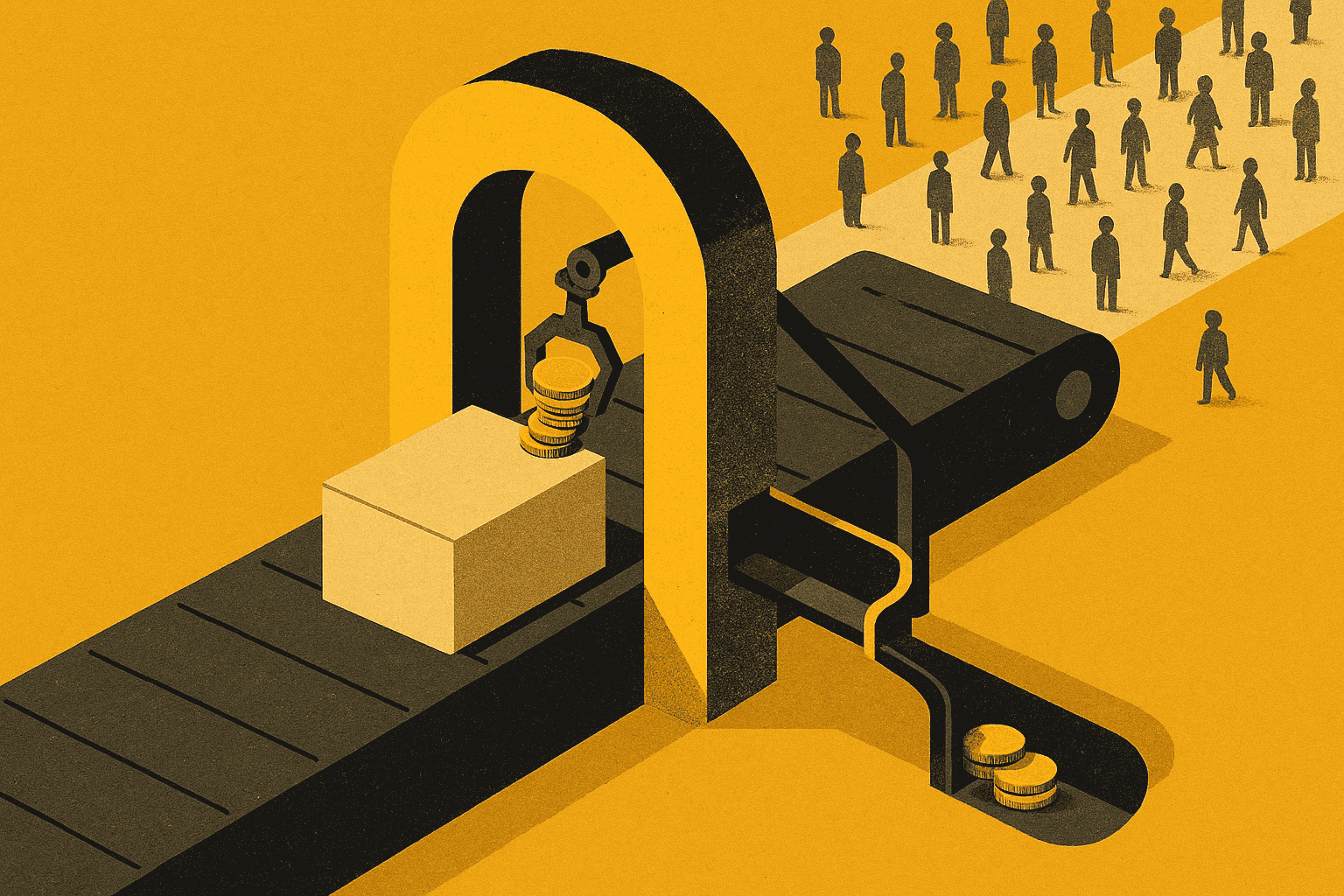
That is the mechanism. A premium has always been the reward for being asked for by name. When an agent picks a protein powder under $50 by rule, the brand that wins is the one that fit the filter, not the one the buyer loves. Or as Graham puts it, “an agent that purchases you is not a customer who chose you.” The comparing and deciding that used to happen in a shopper’s head, the place where a brand could earn preference, moves out of reach.
Then the second half of the bind, and it’s worse: even the win is unreliable. Rand Fishkin, co-founder of SparkToro, tested how consistent AI recommendations actually are across 600 volunteers, 12 buying questions, and 2,961 responses from ChatGPT, Claude, and Google’s AI Overview.
“There’s a <1 in 100 chance that ChatGPT or Google’s AI, if asked 100X, will give you the same list of brands in any two responses.”
Ask the same question a hundred times, get a hundred different lists. The ordering is even shakier, roughly a 1 in 1,000 shot at matching twice. Fishkin’s verdict on the tracking tools sold against this is that “any tool that gives a ‘ranking position in AI’ is full of baloney.”
Put the two findings together and the trap is plain. Brands are being asked to pour budget into optimizing for a coin flip, and the prize for winning that flip is a sale stripped of the relationship that made it profitable. You can’t reliably be the pick, and being the pick is worth less than it used to be.
Here is why the margin leaves. A brand’s premium rests on two things an agent takes over: the memory of choosing you, and the data trail of the buyer arriving at your door. When the agent brokers the purchase, it keeps the discovery relationship and hands you a fulfilled order. The precedent isn’t hypothetical. Hotels have paid online travel agencies 15% to 30% a booking for years and surrendered the guest data in the bargain. Musicians earn fractions of a cent when a playlist, not a fan, does the choosing. Agentic commerce runs the same play across the retail shelf.
For a marketing team, that resets where the next dollar goes. Making your feed readable to an agent is table stakes, not a moat, and it’s a different job from chasing product-feed placement over ChatGPT ads or winning the AI answer itself. The defensible spend is the demand that makes a buyer name you before the agent opens: branded search, owned audiences, first-party data you collect directly, the reasons someone overrides the default. The tax compounds precisely because most teams are funding the legibility and starving the desire. It’s the same discipline gap that surfaced when AI exposed the broken funnel: the teams with real demand generation don’t pay full freight.
The near-term move isn’t to opt out of agentic commerce. The buyers are already there. It’s to price the tax and fund against it. Three questions worth putting to the next budget review: What share of our sales now arrives through an agent that keeps the customer? What are we spending to be found by machines versus to be wanted by people? And if branded search went flat tomorrow, would an agent have any reason to prefer us? A brand an agent can read is cheap to build. A brand a buyer asks for by name is the one that still sets its own price.
Quoted in this story
Want your perspective in coverage like this? Get quoted.
Sources
- The Feast: Meanwhile, As You Were Optimizing
- SparkToro: New Research: AIs Are Highly Inconsistent When Recommending Brands or Products
- Salesforce: With AI Adoption Surging, Shopping Behavior Is at an Inflection Point
- Google: New agentic commerce tools and an open protocol for retailers and platforms
This story is part of our running coverage: the full picture →
Get Net Effect.
The net effect of AI on your marketing: the stories that matter, twice a week, in five minutes.