76% of Marketers Now Spend Their Week Checking the AI's Work. The Auditor Just Became the Marketer.
The marketing task that survives AI keeps turning out to be the same one: checking the machine's work. Growth teams are reclassifying into quality control, and the best auditor now wins the seat.

Three quarters of marketers now spend at least three hours a week editing, fact-checking, or correcting what the AI produced. That’s from an Optimizely study of 2,003 marketing leaders across seven countries, fielded this past May and June. In the same survey, only 4% said AI saves them time at every stage. And 25% admitted they frequently publish AI content they know is off-brand, just to hit a deadline.
Read those three numbers together and a question forms that most “AI productivity” pitches skip right past. If the machine makes the first draft of everything, what exactly is the human for?
The answer, across our own reporting and the fresh data, keeps landing in the same place. The marketing job that survives AI is the checking of the machine’s work. Growth teams are quietly reclassifying into quality control, and the person who wins a seat is the one who can catch what the model got wrong and put their name on what it got right.
We’ve watched this arrive one story at a time. When Anthropic published how its own marketing team automated its weekly reporting, the work left standing was the verification, not the analysis. When agencies started running studies on synthetic respondents, the job that survived was vetting the last 20%, and nobody had priced it. The economists who warned displacement is coming fast noted marketers are already reskilling away from production and toward judgment, oversight, and taste. Even the 11% of companies that “replaced” marketers with AI mostly just handed the survivors a second job: minding the machine.
Bryan Cheung, CMO of Liferay, describes his own team’s week in one sentence.
“My teams spend considerably less time writing and editing, and more time reviewing and refining drafts that AI has produced.”
That’s less a productivity note than a job description, and it’s spreading. The agency world is further down the road. Sunup’s research found 91% of senior agency leaders expect AI to cut headcount and 57% have slowed entry-level hiring. Cofounder Brendan Shea predicts agencies become “leaner, more senior-led.” A leaner, senior-led shop is one where nearly everyone’s job is to judge and approve, and nearly no one’s job is to make the first version.
Now the pushback, and it comes from people worth taking seriously. The optimists say AI doesn’t demote the marketer to a checker so much as promote them to a creator. Adobe’s enterprise CMO, Rachel Thornton, argues that automating the tedious work lets creative professionals “spend more time on storytelling, strategy and craft.” Her colleague Simon Morris adds that “the one thing AI can’t solve is taste and judgment.” And Ari Kuschnir, who runs the production company m ss ng p eces, puts it most sharply:
“Editing is my superpower. Every time I try to automate the editing process, the AI does a terrible job because it lacks subtlety, taste, and human touch.”
Kuschnir is right. He’s also making my case for me. He concedes the behavior, his day is now editing the machine, and disputes only the label. Call it taste, call it craft, call it QA. The org chart doesn’t care what you call it. It cares that the value now sits in the review step instead of the draft step, and it hires, pays, and fires on that basis. “Editing is my superpower” and “the survivor is the best auditor” describe the same person. One version just sounds better on a conference stage.
So here’s the frame worth keeping. Every marketing role is being rewritten around a single question: can you vouch for the output? Call it the verification premium. The premium no longer pays for making things, because the machine makes things for pennies. It pays for standing behind them, for being the name attached when the AI is confidently wrong. That 25% publishing off-brand work under deadline is the early tremor of one problem: verification capacity can’t keep pace with generation capacity.
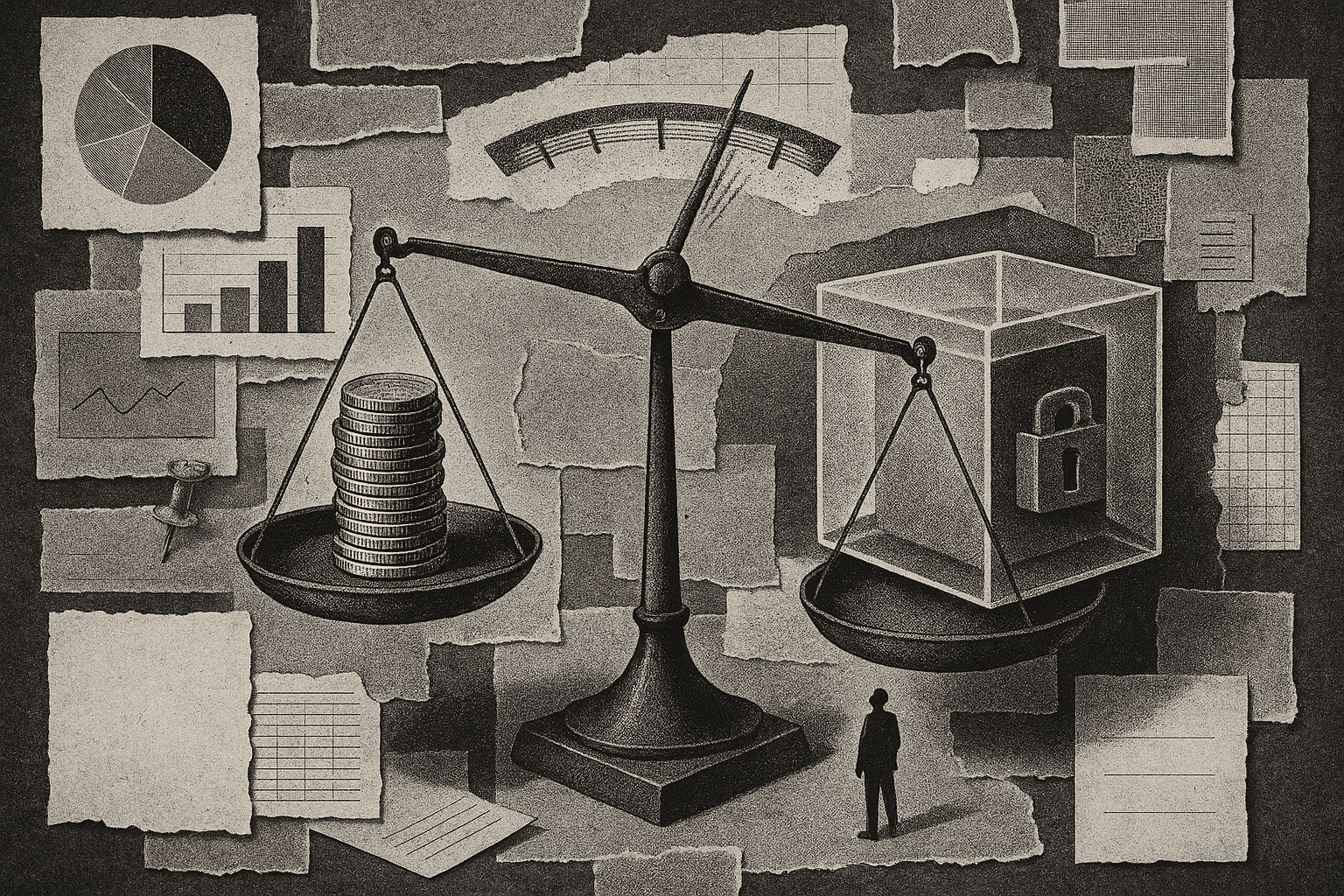
The mechanism underneath is a supply shock. Generation used to be scarce and expensive, so we paid for it and built teams around it. AI made generation nearly free and nearly infinite. When one input drops to zero, value moves to whatever stays scarce beside it. What’s scarce now is the judgment to tell good output from plausible garbage, plus the accountability to sign off on it. Marketing’s value migrated one step downstream, from the hand that makes to the eye that checks.
Where does this go? Generation keeps getting cheaper and faster, while verification stays stubbornly human and refuses to scale the same way. Extrapolate that widening gap. My call, and it’s a projection rather than a fact: by the end of 2027, “reviews and validates AI-generated output” will be an explicit, named responsibility in the majority of senior marketing job descriptions. A marketer who can’t demonstrate that judgment won’t be hireable at that level. What would change my mind: if models get reliable enough that human review stops being load-bearing, the premium evaporates and this reclassification reverses. But 76% of marketers still spending their week fixing AI output, two years into the boom, is not the trend line of a problem about to solve itself.
So if you’re building or advancing a marketing career right now, stop racing the machine at making things. Three moves instead:
- Get loud about what you caught. The error you stopped before it shipped is the work now. Make it visible, because it’s the part with your name on it.
- Build verification into the system, not the vibes. A named owner, a checklist the AI can’t skip, a gate before publish. That 25% off-brand rate is what “we’ll just eyeball it” produces at scale.
- Price the checking. Synthetic research, auto-drafted copy, agent-run campaigns all shove the cost onto the review step. Whoever owns that step owns the advantage, so staff it like it matters.
In 2027, the best marketer on an AI team is whoever’s signature the work can’t ship without.
Quoted in this story
- Bryan Cheung, CMO, Liferay (source)
- Ari Kuschnir, Founder & Managing Partner, m ss ng p eces (source)
- Rachel Thornton, CMO, Enterprise Business, Adobe (source)
- Simon Morris, VP, International Marketing, Adobe (source)
Want your perspective in coverage like this? Get quoted.
Sources
- PR Newswire: New Optimizely Research Reveals Growing Gap Between AI's Efficiency Promises and Marketing Reality
- CMSWire: How AI Rewrote the CMO's Job: An Inside Look
- The Drum: AI won't replace creativity, but it is redefining where the value lies
- Forbes: AI Isn't Replacing Creativity, It Is Moving It Upstream
- eMarketer: AI is taking entry-level ad jobs, except for those fluent in tech
This story is part of our running coverage: the full picture →
Get Net Effect.
The net effect of AI on your marketing: the stories that matter, twice a week, in five minutes.