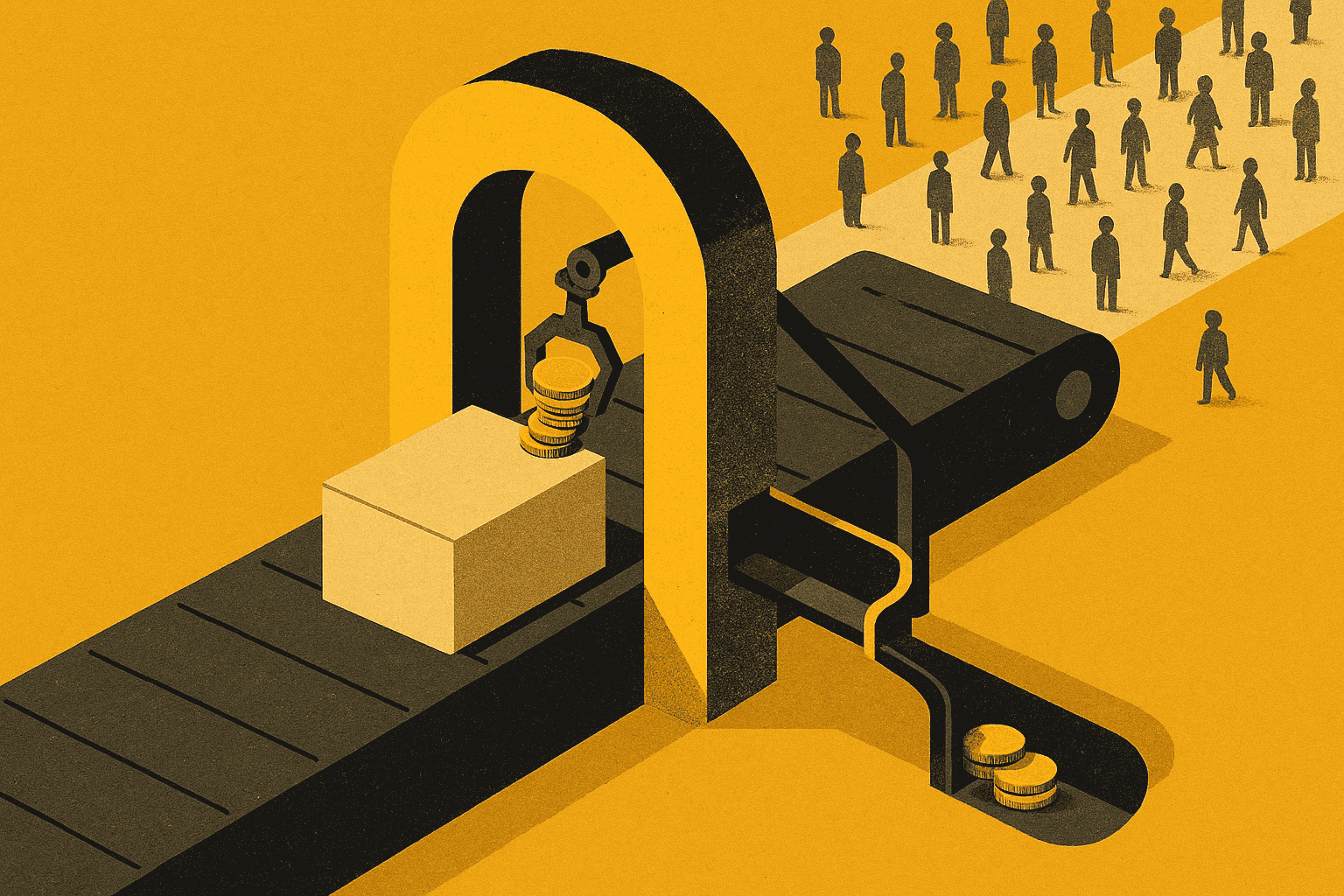
The C-Suite Wants 20% Cost Cuts From AI. Zero Percent of Marketers Say They've Delivered.
A Spencer Stuart survey finds 37% of marketers at the largest firms were told to cut costs 20%+ in two years, with AI as the excuse. Zero percent say they've fully transformed with it.
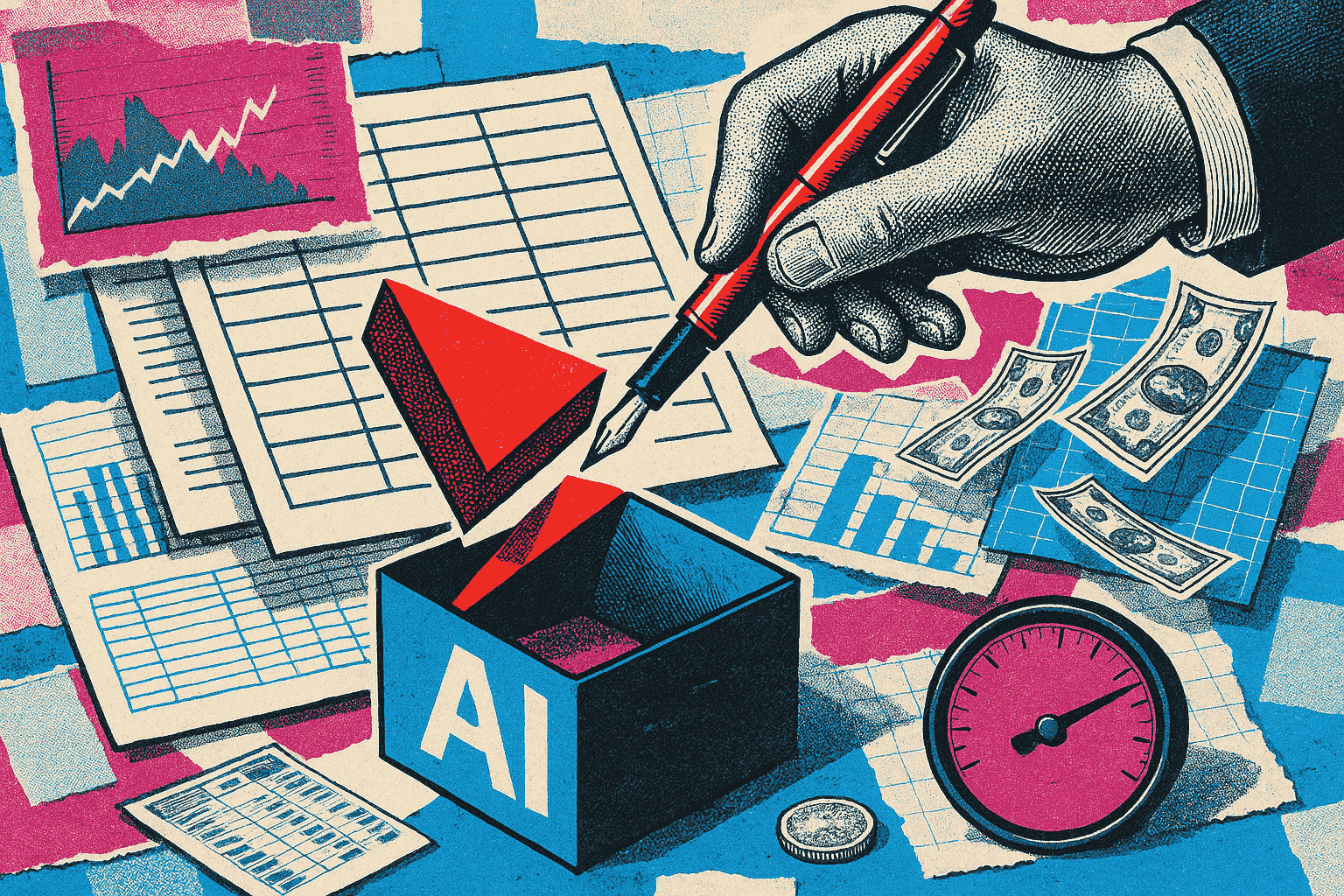
At the biggest companies in America, the number came before the plan. In its AI Reckoning survey, published in December, Spencer Stuart put a number on the pressure. 37% of marketers at the largest firms say their CEOs and CFOs now expect them to cut costs by at least 20% within two years. AI is the reason on the memo.
The trouble is what the same survey found about the AI. Not one of the marketers said they believe they’ve fully transformed their function with it.
That gap, a hard target on one side and no finished capability on the other, is the whole story of marketing’s 2026. And it usually closes in one direction.
Richard Sanderson, who leads Spencer Stuart’s marketing, sales and communications officer practice, told the Wall Street Journal that some leaders feel they “have to deliver, and it may have to be through blunt-force of head-count reduction.”
Read that in order. The 20% was committed first. The tool that’s supposed to produce it isn’t finished. So the lever that’s always available, payroll, becomes the plan.
The evidence that the savings aren’t arriving on schedule is in the same numbers. Only 17% of marketers had actually cut headcount because of AI in the prior 12 months, per the survey reported by Forbes. More than two-thirds, meanwhile, said they feel leadership pressure for AI-driven savings within two years. A separate Teneo survey of more than 350 CEOs and 400 investors found fewer than half of AI projects have generated positive returns. The mandate is running ahead of the math.
Some marketers are saying so out loud, at least anonymously. “The same people will be able to do more, and baseline expectations will go up,” one CMO told Spencer Stuart. That’s the ghost workforce we wrote about this week: the same people absorbing more, with the “efficiency” booked as if a headcount line had actually come out.
Others are pumping the brakes on the tools that were supposed to do the cutting. Jessica Serrano, chief marketing officer of Bagel Brands, said her team used AI for voice-overs and customer polling to save on production and research. Then it stepped back from creative AI tools after vendors couldn’t demonstrate “consistent, high-quality output at scale.” When the tool can’t hold quality, the promised savings turn back into a person’s job.
A 20% cost reduction booked against “AI efficiency” is a forecast, not a result. Budgets and headcount plans get built on the forecast today. When the AI underdelivers, and 0% saying full transformation means it’s underdelivering everywhere, the number is still due. The only way to hit a committed cost target without the promised productivity is to remove the cost directly. That cost is people.
The pressure isn’t evenly spread, which is the tell that this is a finance decision, not a technology one. At companies with $20 billion or more in revenue, 37% face the 20%-plus cost-cut expectation and 47% expect near-term headcount reductions. At smaller firms, only 6% face the same 20% demand. The mandate scales with how badly the CFO needs a number for the board, not with how ready the AI is to deliver it.
For any marketing leader watching this arrive, the risk is specific. Once a 20% AI-savings figure is board-committed, it stops being a target and becomes a debt, due whether or not the tools worked. And it lands on the experienced people who are hardest to replace, the same pattern already shortening CMO tenures and turning AI budget growth into an unclosed ROI gap.
Three moves are worth making before the number hardens.
First, separate “AI made us faster” from “AI let us cut.” Finance will conflate them by default. If your team is producing more with the same people, that’s real. But it’s not a 20% cost reduction, and letting it get logged as one means the shortfall comes out of headcount later.
Second, put a date and a proof point on every claimed AI saving before it enters a plan. A saving that can’t be demonstrated this quarter shouldn’t be spent next quarter.
Third, if the mandate is already set, name the tradeoff in writing. A 20% cut delivered by attrition and overwork is not the same as one delivered by working software, and the difference is your team’s capacity a year from now.
The C-suite priced in a productivity gain that, by marketers’ own account, hasn’t fully arrived. The 20% is still due, and right now the plan is to pay it in people.
Quoted in this story
- Richard Sanderson, Marketing, Sales and Communications Officer Practice Leader, Spencer Stuart (source)
- Jessica Serrano, Chief Marketing Officer, Bagel Brands (source)
Want your perspective in coverage like this? Get quoted.
Sources
This story is part of our running coverage: the full picture →
Get Net Effect.
The net effect of AI on your marketing: the stories that matter, twice a week, in five minutes.