Publicis Books 87% of Its Revenue as AI-Powered While Its Clients Still Won't Let the Agent Drive
Publicis raised guidance on a business where AI-powered marketing services are 87% of net revenue. Its own clients describe AI as a small slice of the actual work.

Publicis Groupe reported its first-half results on July 16 and raised full-year guidance to organic growth of 4.5% to 5%. Buried in the same release is a line worth reading twice: AI-powered marketing services now represent 87% of the group’s net revenue, and grew 6.5% organically in the quarter.
The other 13% is the technology practice, and Adweek reports it declined by single digits in Q2.
Those two numbers add to 100. Every euro Publicis books is now filed under one of two headings, and the bigger heading has the word AI in it.
Arthur Sadoun, the group’s chairman and CEO, spent his commentary on the growth rather than the label:
“Q2 organic net revenue growth reached +4.8%, ahead of Q1 and despite a tougher comparable base, further widening the gap with competition by circa 610 basis points.”
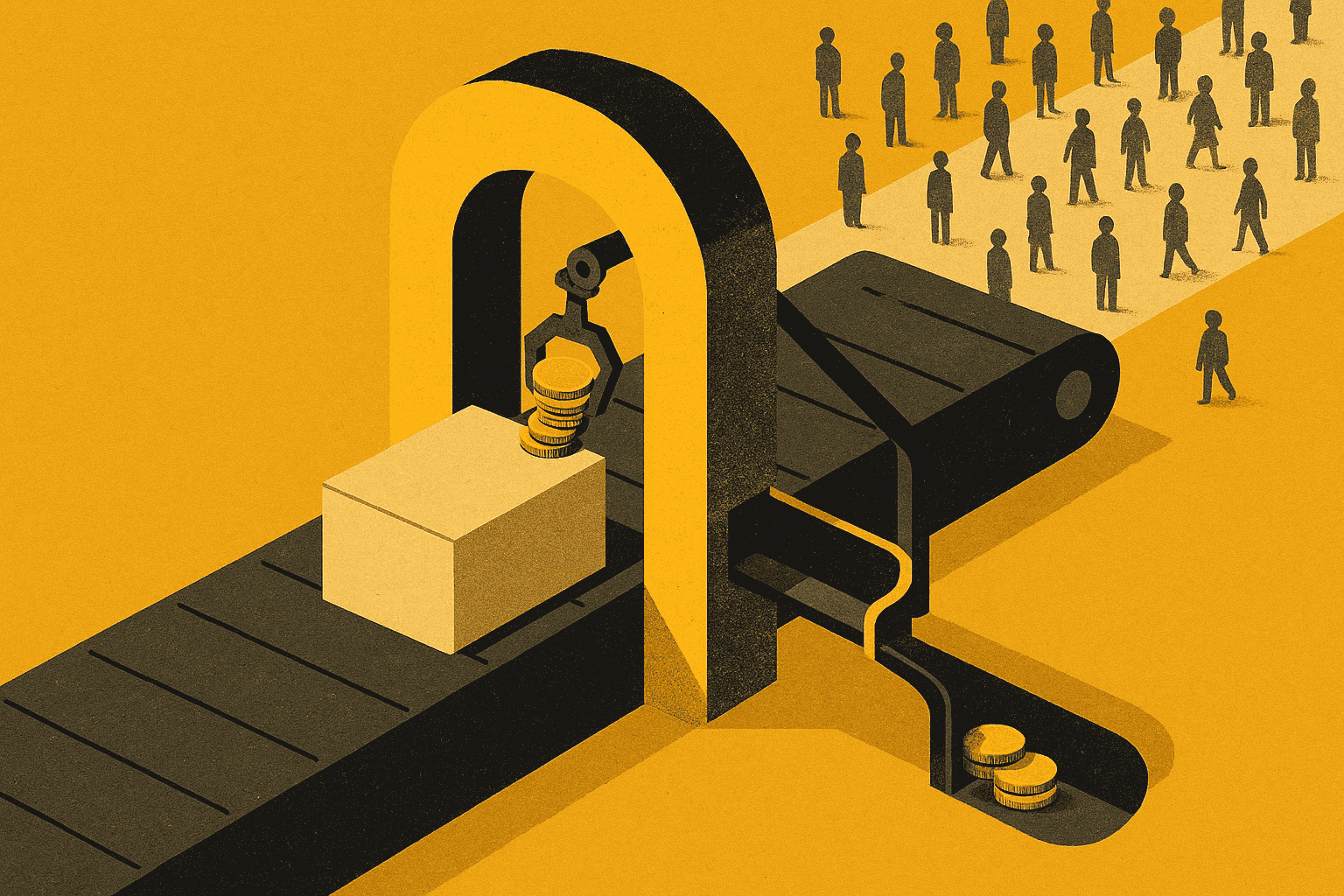
The 87% is a filing decision. It describes how a holding company sorted its revenue into buckets, and it tells you nothing about how much AI touched any particular campaign.
That distinction matters because the clients paying the invoices describe something much smaller. Sean Gilpin, CMO at Hyundai, told Digiday in February that the machines are still in the passenger seat:
“I don’t think anyone’s let the agent take the wheel, so to speak, from an investment management [point of view].”
Ivan Dashkov, head of emerging marketing tech at Puma, was more specific about the size of it. He said Puma is using AI “in some image generation for some creative campaigns, usually lower tier campaigns,” and put it at a “very small percentage” of the brand’s social assets.
Hold those next to each other. On the sell side, 87% of a €3.8 billion quarter is AI-powered. On the buy side, it’s a slice of the low-tier social work.
Both statements can be true at once, and that’s the problem. “AI-powered” has no agreed definition, no audit, and no threshold. A campaign planned by a human, bought through a platform that uses machine learning somewhere in the stack, and reported in a dashboard with a forecasting model qualifies. So does everything else. When a label covers 87% of a business, it has stopped sorting the business.
The industry has noticed the language collapsing. Research from 3C Ventures, covered by Digiday in June, found agency AI messaging had converged so completely that the descriptions are interchangeable:
“The language is so uniform that, stripped of branding, it would be nearly impossible to attribute a platform description to its source agency.”
Meanwhile the gap between what agencies sell and what clients absorb keeps widening. Digiday reported in July that holding company executives sort CMOs into four roughly equal camps: a quarter actively building with AI, a quarter who want to but don’t know how, a quarter frozen, and a quarter who still call it a fad. Three of those four camps are buying AI-powered services from someone right now.
Jess Dervyn, an analyst in Gartner’s marketing practice, named the thing that closes the gap:
“Advertisers are expecting a lot of transparency. They want to understand where AI is being used, so agencies have to provide that.”
Here’s the mechanism underneath the label. Public markets pay for AI exposure, and a holding company that can say most of its revenue is AI-powered gets rated differently than one that says it sells advertising. Publicis has real substance behind the claim: it put roughly $3 billion and about 2,400 net new hires into media and creative in the first half, and it announced a $2.2 billion acquisition of the data platform LiveRamp in May. The label remains a bucket wide enough to hold the whole company, and the whole company is what went in it.
For anyone buying marketing services at a smaller scale, this is a vocabulary problem with a budget attached. Your agency, your martech vendor, and your freelancer all now describe themselves with the same adjective Publicis uses for 87% of a multibillion-euro business. The word can’t help you tell them apart, and it certainly can’t tell you what changed in the work. It’s the same pattern that’s turning AI features into table stakes rather than products, and it’s why the ROI question keeps coming back unanswered across the whole martech stack.
So stop asking vendors whether they use AI. Everyone says yes, and 87% of Publicis proves the answer is free. Ask what specific task it does end to end without a person touching it, who checks the output, and what that changed about the price or the turnaround. If the answer comes back as a capability instead of a workflow, you’re buying the label. Publicis at least has the receipts to back the word. The invoice on your desk probably borrowed it.
Quoted in this story
- Arthur Sadoun, Chairman and CEO, Publicis Groupe (source)
- Sean Gilpin, Chief Marketing Officer, Hyundai (source)
- Ivan Dashkov, Head of Emerging Marketing Tech, Puma (source)
- Jess Dervyn, Analyst, Marketing Practice, Gartner (source)
Want your perspective in coverage like this? Get quoted.
Sources
- Publicis Groupe: Publicis Groupe: First Half 2026 Results
- Adweek: Publicis Boosts Full-Year Guidance as Clients Embrace AI, But Delay Transformation
- Digiday: The AI gap between agencies and their clients is widening, not closing
- Digiday: Agency AI pitches are starting to face harder questions
- Digiday: Agentic with a small a: CMOs are adopting AI more slowly than it's evolving
This story is part of our running coverage: the full picture →
Get Net Effect.
The net effect of AI on your marketing: the stories that matter, twice a week, in five minutes.