An AI Agent Is Shopping Your Software Right Now. On Most B2B Sites, It Can't Find Your Price.
New research finds the AI agents shopping for B2B software stall most often at the pricing page, then cite a competitor. Agent-readiness is becoming a marketing-web mandate.
Point an AI agent at 100 B2B software sites, tell it to shop, and it handles the easy questions cleanly. It stalls on the one that closes deals: the price.
That’s the finding from a new analysis by growth advisor Kevin Indig and the analytics startup Siteline. They ran AI agents (software that shops and acts on a user’s behalf instead of just answering questions) through 100 top B2B products. For each product the agents ran three buyer tasks, five times each, with no starting links handed over. On integrations, they answered straight from the vendor’s own site 93% of the time. On security, 92%. On pricing, just 79%. Pricing was also where they most often abandoned the vendor for someone else: 77% of all third-party citations came from pricing questions.
Indig’s line for what’s happening is blunt:
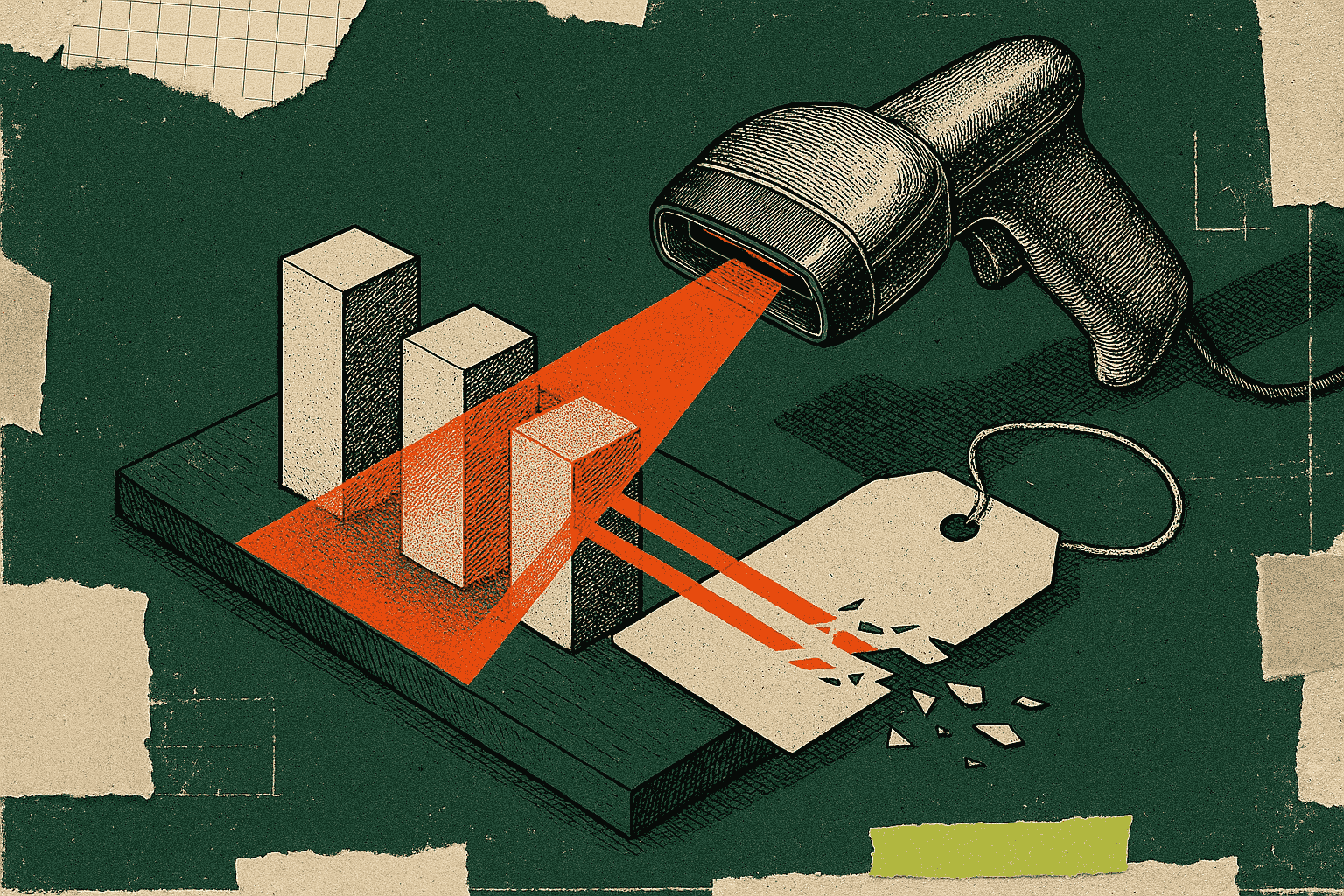
“AI agents turn websites from showrooms into barcodes.”
Your website has a new visitor that never sees the design, the hero video, or the customer logos. It reads facts. When the fact it needs is missing or buried, it leaves and asks someone else.
Someone else is usually a competitor or a review site. When a vendor hid prices, 45% of the agent’s citations still came from third parties like G2, Capterra, or a comparison blog. Even vendors that published a plain number weren’t safe: 18% of those runs still pulled an outside source. The agent doesn’t sit on hold for sales. It fills the gap with whatever it can read, and about half of that filler was editorial content a competitor may have written.
Siteline ran its own benchmark and hit the same wall. Across 534 runs, only 65% of plans showed a readable price; the rest routed the agent to a demo or a sales contact. Marketing, sales, and support tools were the worst offenders, with 30% showing no price at all, against zero for productivity and developer tools. David Kaufman, co-founder and CEO of Siteline, put the cost of that gap plainly:
“Only 65% of plans surfaced pricing directly. The rest got pushed to a demo or managed sales process, leaving room for the agent to recommend a competitor that does publish its prices.”
This isn’t a hypothetical shopper. AI-driven traffic to US retail sites grew 393% year over year in the first quarter of 2026. That traffic now converts 42% better than everything else, a full flip from a year earlier when it converted 38% worse. Revenue per visit from AI referrals ran 37% above the rest. “AI is quickly becoming the primary interface between consumers and their favorite brands,” said Vivek Pandya, director of Adobe Digital Insights. Retail moves first, but B2B buyers reach for the same assistants, and the agent that can price a pair of running shoes is the one being asked to price your seat license.
Why the pricing page is the choke point
Indig sorts the failure into three modes, and none of them stops a human:
“A page can persuade a human and still fail an agent if the facts are hard to find (opacity), hard to fetch (machine-readability), or hard to cite (access friction).”
Opacity is the first. The price isn’t published, or it’s wrapped in “contact sales.” A person accepts that and books a call. An agent scores it as missing data and reaches for a source that has a number.
Machine-readability is the second. The price exists, but it’s drawn by JavaScript, tucked inside a toggle or a slider, or locked in a PDF. The human watches it render. The agent doesn’t run your scripts, and it often reads only the first 15,000 to 20,000 tokens of a page, roughly the opening chunk of text it loads. It finds a blank where the number should be.
Access friction is the third. The agent gets rate-limited, blocked, or handed a broken page. It’s rare, hitting 7% of runs in Indig’s test, but the penalty is steep: those runs saw third-party citations jump from 17% to 77%. One fetch error and the agent stops trusting you almost entirely.
Agent-readiness is now a marketing job
The reflex is to file this as an engineering ticket. It isn’t one. The pricing page, the plans, the “contact sales” wall, the review-site profile the agent falls back to: those are marketing’s surfaces, and marketing owns whether a machine can read them.
The work rhymes with generative engine optimization, the discipline of earning a mention inside the AI answer rather than a rank on the results page. It’s the same pressure that has publishers rebuilding their sites in machine-readable markdown so agents can read them cheaply. The web is growing a second audience that never looks at the page, and the teams winning it treat that audience as a real visitor with its own requirements.
Kaufman’s team found the requirement is boring. “Easy access and concise information was the winning combination,” the Siteline write-up concluded. Publish the number in text. Add schema markup so the price reads as labeled data. Keep it early in the page and out of a script the agent won’t run. Let the crawlers in. None of that is a moonshot, and all of it is losable to a competitor who ships it first.
So run the test before your buyer’s agent does. Point a browsing agent at your own pricing page and watch where it stalls, then fix what it can’t read. The version of your site a human sees is no longer the only one being graded. The machine is reading the barcode, and on most B2B sites it’s coming back blank.
Quoted in this story
- Kevin Indig, Growth Advisor, Growth Memo (source)
- David Kaufman, Co-founder and CEO, Siteline (source)
- Vivek Pandya, Director, Adobe Digital Insights, Adobe (source)
Want your perspective in coverage like this? Get quoted.
Sources
- Growth Memo: Where AI agents get stuck on your site
- Siteline: How Well Do AI Agents Understand Top Software Products?
- Decrypt: AI Traffic to US Retailers Jumps 393% in Q1 as Agentic Shoppers Outspend Humans
- Search Engine Journal: AI Agents Struggle To Read B2B Pricing, Report Finds
This story is part of our running coverage: the full picture →
Get Net Effect.
The net effect of AI on your marketing: the stories that matter, twice a week, in five minutes.