ChatGPT Work Can Now Click Through Your Apps Like a Coworker. Marketing Ops Is Where It Lands First.
OpenAI's ChatGPT Work can operate your computer, clicking and typing across your apps to finish whole tasks. The chatbot became a coworker, and marketing ops is the first desk it reshapes.
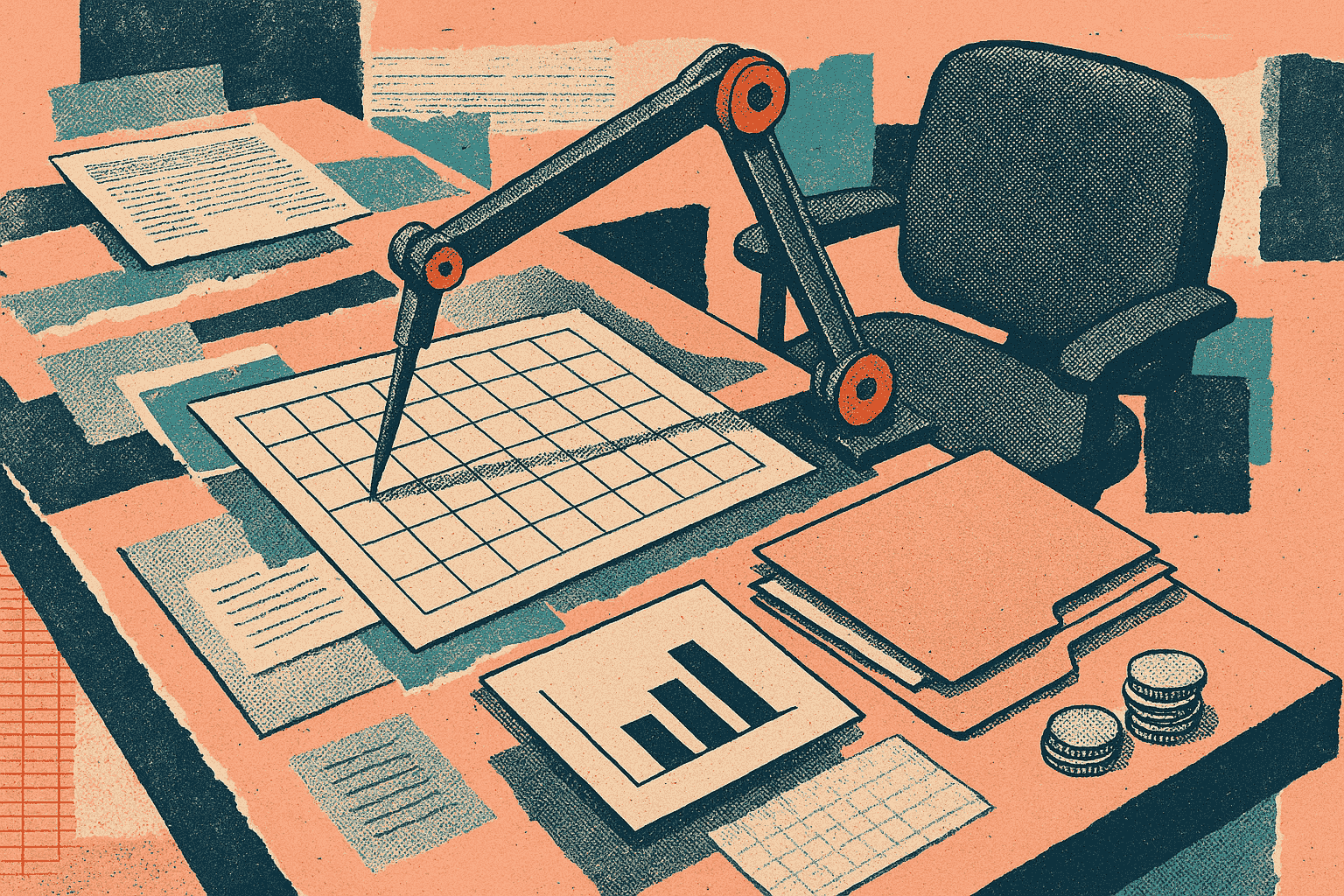
On July 9, OpenAI launched ChatGPT Work, and the part that matters isn’t in the name. Inside the new desktop app there’s a setting called Computer Use, and switching it on hands ChatGPT the same thing you’d hand a new hire: your actual computer. It can operate your machine, clicking, typing, and moving files across your apps, tools, and browser, then keep going while you’re offline.
This is a computer-use agent: software that takes an outcome and works through the steps on its own. It clicks through your apps the way a person would, instead of answering and waiting for the next question. ChatGPT Work runs on GPT-5.6 and is built to stay on a project for hours, returning finished sheets, slides, docs, and web apps. OpenAI started the rollout with Pro, Enterprise, and Edu accounts and is pushing it to Plus and Business over the following days, with the desktop app landing across plans.
Daan van Rossum, founder and CEO of the newsletter Lead with AI, marked the break from the old way of using these tools:
“With Work, you hand off the whole chain, and it runs multiple steps across multiple tools without you in the loop for each one.”
Mike Kaput, chief content officer at the Marketing AI Institute, tested it the day it shipped and flagged that exact setting on episode 225 of The Artificial Intelligence Show:
“Once I enable computer use within this app, this thing can now go do all sorts of stuff with my files, spin up agents to do all sorts of things.”
He wasn’t selling it. “Very, very dangerous,” he said. “Do not enable this if you don’t understand the capabilities or if you’re not allowed.”
The shift underneath the setting is the one marketing leaders should sit with. Work stopped being something you ask ChatGPT for and became something you delegate to it.
Paul Roetzer, founder and CEO of the Marketing AI Institute, thinks OpenAI buried the lede on its own product. “Their go-to market plan doesn’t match the significance of the launch,” he said on the same episode, describing an announcement that shipped as a couple of blog posts while the thing itself changes how people talk to these models. The adoption data he and Kaput walked through backs the point. BCG survey figures cited on the show put the share of organizations that have integrated AI agents into workflows at 30%, up from 13% a year earlier, with another half running pilots.
What that looks like at a marketing desk is already on the record. OpenAI’s own launch pointed to Angela Ferrante, head of enterprise marketing at Zapier. She used ChatGPT Work to build a repeatable system for reviewing thousands of leads a month across the CRM and email. It surfaced where follow-ups broke down and generated a weekly executive dashboard worth seven figures in potential sales. That’s the kind of standing workflow a marketing coordinator used to own end to end.
Here’s why this wave reaches marketing faster than the last one did. A computer-use agent works the same surfaces your team works: the CRM, the spreadsheet, the ad platform, the deck. It doesn’t need a custom integration or an engineer to wire it in. It reads the screen and clicks the buttons, so any job that lives in software it can see is a job it can attempt. Marketing ops runs almost entirely inside those apps. The lead scrubbing, the reporting, the campaign-brief assembly are the tasks that move first, and they’re the ones an ops coordinator or a junior does today.
The catch is that the capability arrived ahead of the control. In the same survey, half of companies said they lack clear governance for AI, and two-thirds of workers get little or no guidance on what to do with the time an agent saves. We’ve tracked the front edge of this already: agents are taking the hours-long execution tasks that used to train junior marketers, and cheaper models keep pulling down the cost of running them. ChatGPT Work is what happens when that capability gets a coworker’s access to your files. For marketing jobs, the question stops being which tasks to hand off and becomes who owns the agent once it’s operating inside the apps.
So the real work this quarter is governance, and it has to land before someone on your team flips the Computer Use switch on a Tuesday afternoon. Decide which workflows an agent may run, which files it can open, and whose name sits on the output. Kaput called the setting very dangerous for a plain reason: it works, on your systems, whether or not anyone signed off. Give every agent an owner, or you’ve handed a coworker’s access to your CRM to headcount nobody manages.
Quoted in this story
- Daan van Rossum, Founder and CEO, Lead with AI (source)
- Mike Kaput, Chief Content Officer, Marketing AI Institute (source)
- Paul Roetzer, Founder and CEO, Marketing AI Institute (source)
Want your perspective in coverage like this? Get quoted.
Sources
- The Artificial Intelligence Show (SmarterX): Episode 225: GPT-5.6, ChatGPT Work, Enterprise Agents, AI 2040 & Apple Sues OpenAI
- PYMNTS: OpenAI Launches ChatGPT Agent That Executes Complex Workflows
- The Next Web: OpenAI launches ChatGPT Work, an agent built to finish the job
- Lead with AI: ChatGPT Work Is Here: OpenAI's Answer to Claude Cowork
This story is part of our running coverage: the full picture →
Get Net Effect.
The net effect of AI on your marketing: the stories that matter, twice a week, in five minutes.