TikTok Shipped Eight Ad Updates. The One That Reshapes Your Media Team Lets Agents Run the Console.
TikTok's Q3 preview bundled eight ad updates. The Agentic Hub lets outside AI agents plan, launch, and optimize campaigns through its Ads MCP, moving the media buyer's click-work into software.
TikTok previewed eight ad-product updates for the third quarter on July 28. Seven are the usual knobs. Advertisers can now block up to 40% of sub-regions in a national TopView buy, and GMV Max Pro folds coupons, affiliate costs, and platform commissions into one optimization target, per PPC Land’s rundown.
The eighth update is a door.
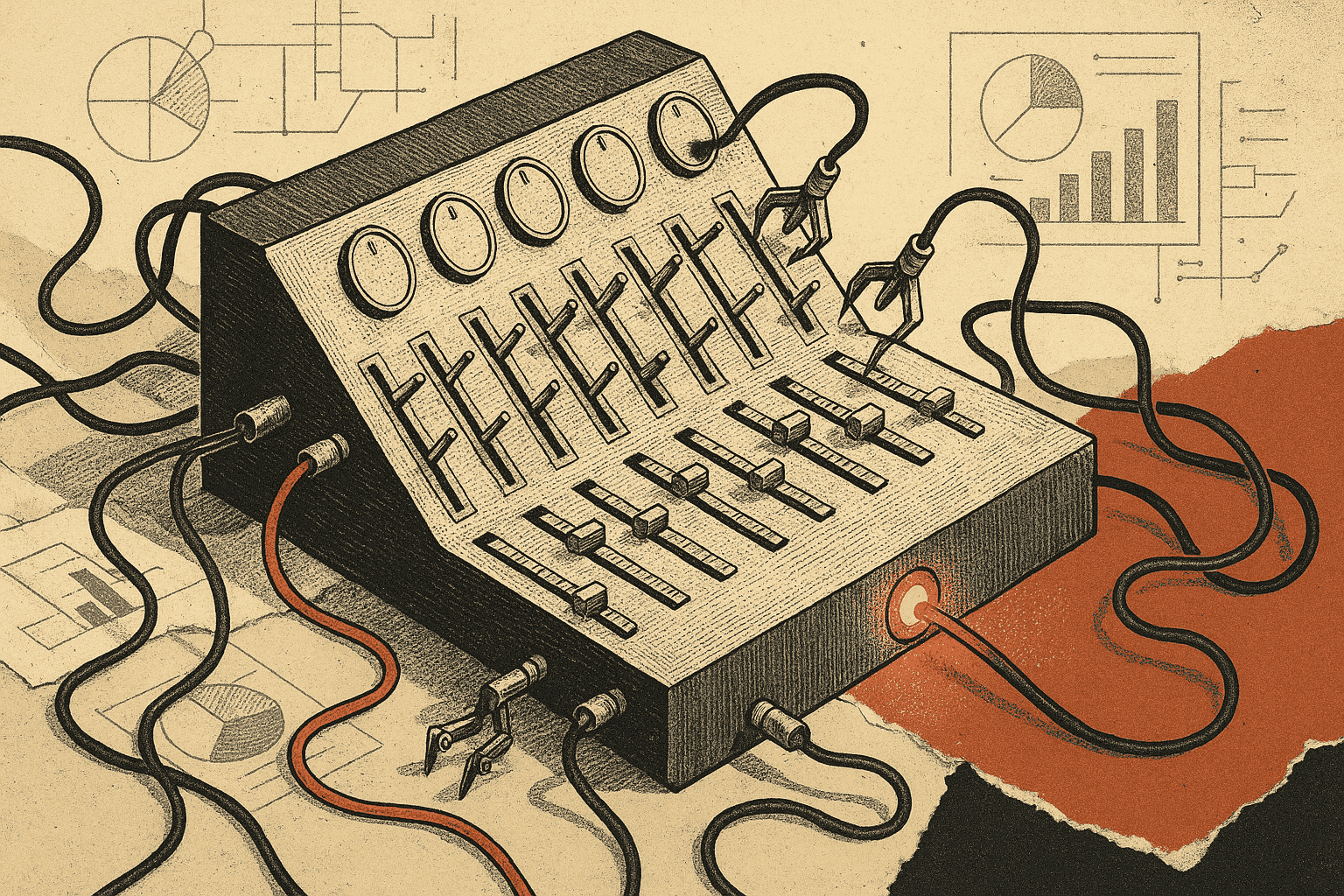
It’s called the Agentic Hub, a spot inside Ads Manager for building AI agents that run campaigns, powered by the TikTok Ads Model Context Protocol. MCP is a common plug that lets any AI agent operate a software tool the way a person would, clicking the buttons, reading the numbers, making the next call. TikTok first shipped the server in May at its TikTok World summit. The Agentic Hub is where it stops being a developer preview and starts being a front door.
Jose Villalobos, TikTok’s Global Head of Product Marketing for Platform and Core Ads, described what the plug does in plain terms when the server launched.
“effectively enable marketers to connect their own AI agents directly to the Tiktok ads platform so their AI systems can plan, launch and optimize campaigns without manual intervention”
Put a media buyer’s week beside that sentence. Bid adjustments, budget shifts, audience swaps, campaign setup: the click-heavy middle of the job is exactly what the agent handles through the protocol, Digiday reported. The console stops being the place a person works. It becomes the place a person’s software works.
This is the pattern worth naming, because it isn’t only a TikTok story. The big ad platforms are turning their managers into ports that agents plug into. Once your buyer’s daily labor is a set of API calls an agent can make faster and around the clock, the value of the buyer moves off the clicks and onto the judgment that decides what the agent should chase. We’ve watched the same logic show up in Google’s push to let automation, not the advertiser, own the account, and in the way AI-native tools keep collapsing into features of the platform rather than standalone products.
Not everyone thinks handing the keys over is a clean win. Shirley Marschall, an independent adtech and programmatic consultant, flagged the cost of routing your buying through a platform’s own agent layer.
“If you route through someone else’s MCP, you lose visibility into how agents are querying you, what they’re comparing you against, what’s driving conversion. In an agentic world, that’s your most valuable signal, which you don’t want to hand to a third party.”
Her worry is a business one, not a technical one. The agent port is convenient, and convenience is how a platform learns everything about how you buy. The counter-move she describes is a split: the big platforms race to make their protocol the standard, and everyone else races to keep an agent layer they control on top of it.
Others in the buying trenches read the same news as overdue plumbing. Samraj Matharu, a marketing scientist and founder of The AI Lyceum, an independent AI-education community, welcomed it on LinkedIn.
“Well done Tik Tok 👏 I see the next few years being the ‘MCP era’, where alongside DSPs and their APIs, every platform has an MCP to connect to agents. Intraoperability and interoperability across the ecosystem.”
Both of them are right, which is the uncomfortable part. The port is coming to every platform, and the buyer who plugs in gets speed while the platform gets a map of their strategy.
The mechanism underneath is a rebuild. For a decade, running paid social meant a human sitting in a dashboard, pulling levers a few times a day. The dashboard was built for hands. The MCP rebuilds the same controls for an agent, so the levers can be pulled continuously, at 3 a.m., across a hundred ad sets, by software that never gets bored. That’s a real efficiency, and it’s also a demotion of the task. When the pulling gets automated, the money stops paying for the pulling.
So what changes for a marketing team that lives on TikTok? The in-house buyer who spent the week inside Ads Manager is now the person who briefs and supervises the agent that lives inside Ads Manager. For agencies, the pitch that was “we run your campaigns” gets thin fast, because a client can point an agent at the same console for a fraction of the retainer. The agencies that survive sell the layer above the port: the strategy the agent executes, the creative it can’t invent, and the oversight that catches it when it optimizes toward the wrong number.
If you own paid social at a small B2B company, three moves follow from this week.
- Learn the port before your competitors’ agents do. Get hands on the protocol through a tool you control, and treat it as a skill, not an experiment. The buyers who can direct an agent will out-produce the ones still clicking.
- Keep your first-party signal on your side of the wall. Marschall’s warning is the practical one. Decide what conversion and audience data the platform’s agent gets to see, and keep the parts that reveal your strategy in a layer you own.
- Rewrite the job before HR does. The media-buyer role is becoming an agent-manager role. Say so in the next req you post, and hire for judgment and brief-writing over dashboard speed.
TikTok bundled the Agentic Hub with seven ordinary updates, which is how a change this structural arrives: as item eight on a product-preview list. The console you’ve been clicking for a decade just grew a port for robots. The work that’s left is deciding what you point them at.
Quoted in this story
- Jose Villalobos, Global Head of Product Marketing, Platform and Core Ads, TikTok (source)
- Shirley Marschall, AdTech & programmatic consultant, Independent (source)
- Samraj Matharu, Founder, The AI Lyceum (source)
Want your perspective in coverage like this? Get quoted.
Sources
This story is part of our running coverage: the full picture →
Get Net Effect.
The net effect of AI on your marketing: the stories that matter, twice a week, in five minutes.