Google Can Now Generate Your Targets, Your Ads, and Your Landing Pages. The Liability Didn't Move.
A revised Terms of Service took effect July 1 with no acceptance step, making automation the baseline condition. Advertisers still own everything it produces.

Every Google Ads account changed contracts on July 1. There was no login prompt and no acceptance step. The clause that matters reads:
“Customer authorizes Google and its affiliates to serve ads, including through the use of automated program features to format, select, or generate targets, ads, or destinations on Customer’s behalf.”
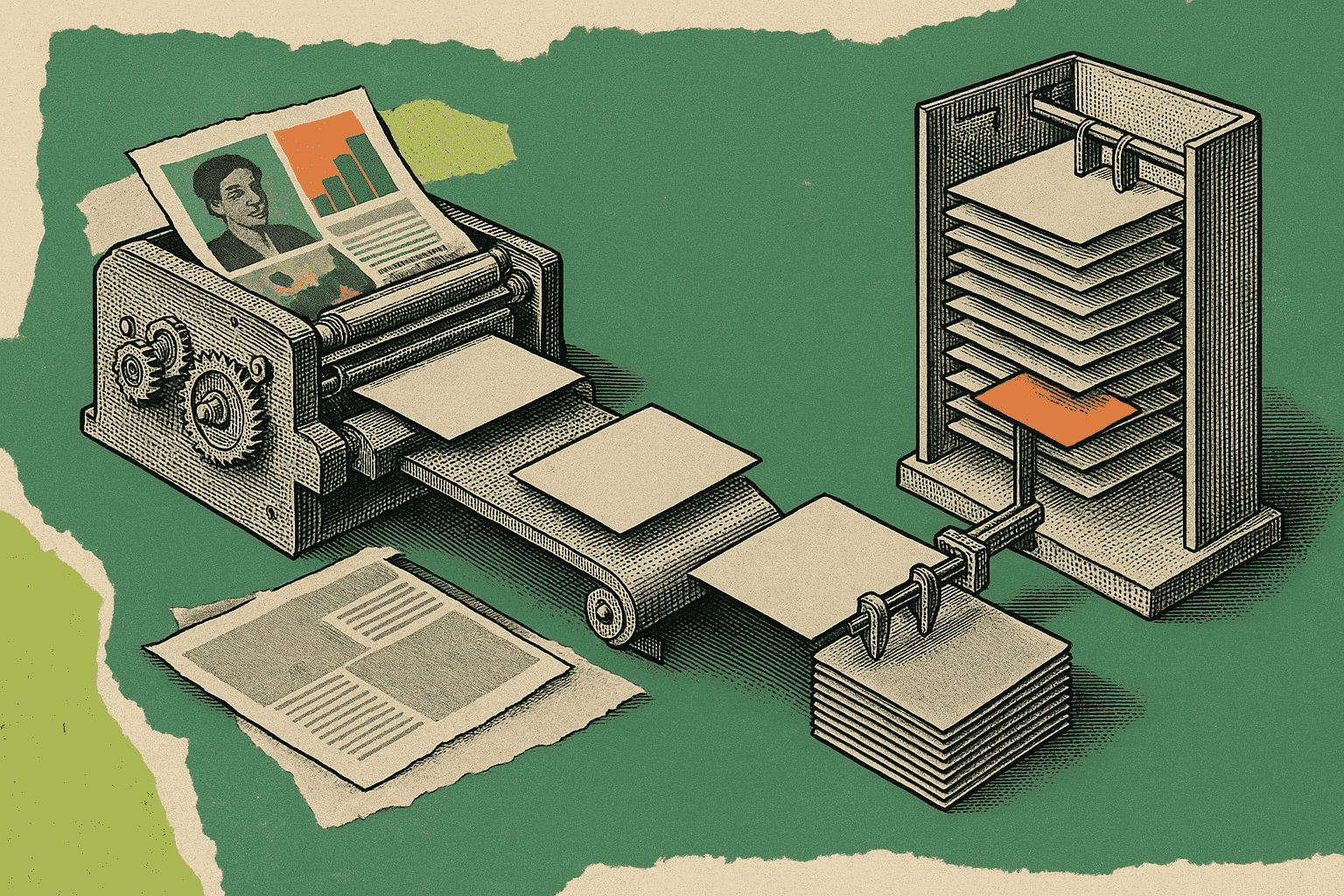
Three nouns in that sentence carry the weight. Targets are who sees the ad. Ads are what it says. Destinations are where the click lands. Google’s systems can now generate all three, and the previous terms, which framed automation as features an advertiser could opt into or out of, no longer describe the arrangement. Automation is the baseline condition of the account.
What didn’t change is who answers for the output. Advertisers remain responsible for holding the rights to everything they feed the system, and for reviewing, approving, editing, or removing whatever the automation produces.
Diana Talhelm, Senior Paid Search Strategist at ZATO Marketing, put the split plainly:
“Automatically generated assets can include outdated pricing, unsupported product claims, broad guarantees, or copy that does not match approved brand language. None of that is a Google problem under the terms. It is your problem.”
Discretion moved. Accountability stayed.
That’s the shape of the year’s quieter platform story, and it repeated eight days later in a second change most advertisers read as housekeeping. On July 9, Google introduced AI transparency labels, a “How this ad was made” disclosure in the My Ad Center panel, rolling out across Search, YouTube, and Discover. Keerat Sharma, VP & General Manager of Ads Privacy and Safety at Google, framed the goal as helping “people better understand the ads they see, while providing advertisers with straightforward tools to navigate evolving industry standards.”
The tool is real. So is the asymmetry inside it.
When an advertiser uses Google’s own generative tools, inside Performance Max or Demand Gen, the disclosure is applied automatically. When the creative comes from Midjourney, Adobe Firefly, Runway, ElevenLabs, or anything else outside Google’s stack, the advertiser applies the label themselves through a new control. The setting spans five products: Google Ads, Display & Video 360, Campaign Manager 360, Merchant Center, and Ads Editor.
And Google is explicit that using its label doesn’t finish the job. The policy page states that use of the AI label setting “doesn’t guarantee compliance with specific regulations,” and points advertisers toward their own legal advice. The obligation itself isn’t Google’s invention. AI rules in the European Union, India, and New York require disclosure on ads built with certain AI-generated or edited assets. That’s why Common Thread Collective now tells clients running pan-European campaigns to treat visible AI labels as “a baseline requirement in those markets, not an edge case.”
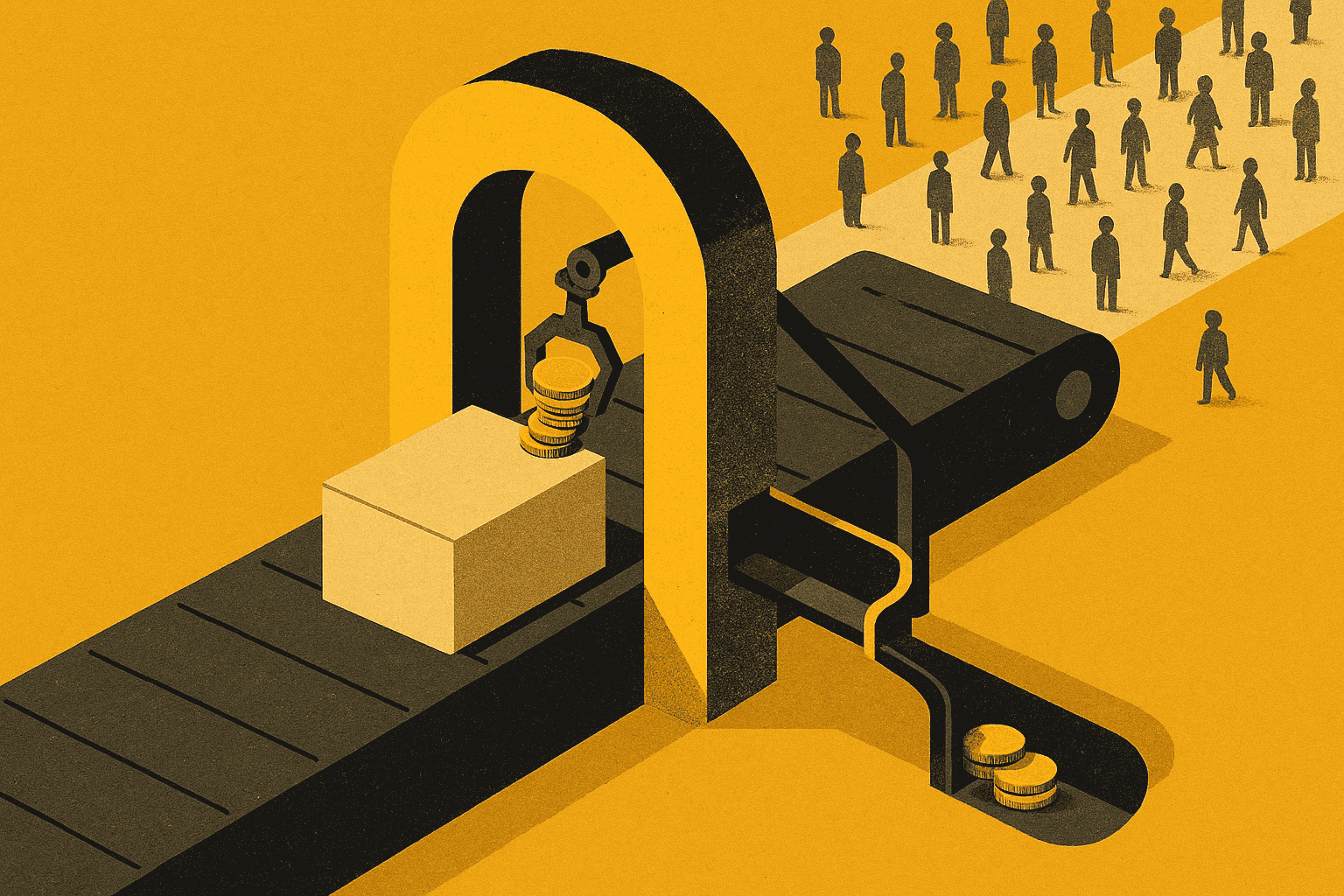
The mechanism here isn’t mysterious, and it isn’t malice. Google’s ad products already ran on automation long before the contract said so, and the terms caught up to the product. Regulation arrived on a separate track and landed on whoever controls the creative. Google can label what its own models make because it knows what its own models made. It can’t know what came out of a tool it doesn’t operate, so that duty routes to the account holder. Each decision is defensible on its own. Stacked in the same month, they produce an account where the platform chooses more and the advertiser certifies more.
For a marketing team of 5 to 30 people with no dedicated paid-search hire, that’s the operational problem. The review burden the terms assume is a job. Someone has to read generated headlines against approved claims, check that a machine-selected destination is a page legal has seen, and log which assets came from which tool. Do that last part badly and the labeling isn’t defensible if a regulator asks. Teams that ran Google Ads as a set-and-check-Monday channel inherited a compliance workflow in July and mostly haven’t staffed it.
This is the same pattern we tracked when WPP and Dentsu started aiming media buys at vector targets nobody can audit: the system gets better at deciding and worse at explaining, while the person signing off keeps signing off. It’s also why the 20% cost-cut mandate handed to marketing teams keeps missing. Automation removes the hours spent building the campaign and adds hours spent checking it, and only the first number shows up in the business case.
Talhelm’s line is the one to keep:
“The machine can help build and optimize your campaigns, but it is not going to be in the client call when something goes sideways. That privilege remains yours.”
Anthony Higman, founder of the agency AdSQUIRE, has argued the changes erode advertiser relevance and control by making automation the default rather than an election, a critique Search Engine Land reported alongside the terms update. He’s describing a real transfer. But framing it as something Google took misses the part advertisers can still act on.
Update, July 31: Google started writing text next to the ad too
The terms gave Google permission to generate the ad. A test running in parallel goes one step further and generates copy the advertiser never wrote, never sees, and can’t edit.
Google confirmed on July 1 that it was testing AI-generated summaries on sponsored Search results, after the digital marketer Darcy Burk spotted them and posted screenshots. The summaries carry their own disclaimer:
“Google AI responses are generated independently and can make mistakes, so double-check responses.”
Google called it “a small experiment to see if adding AI-generated context to Search ads helps people make more informed decisions.” On July 30 the same test turned up on Shopping and Product ads, found by the SEO consultant Brodie Clark. Neither report says advertisers can opt out, preview the text, or see it after the fact.
Put that against the paragraph above about who owns the output. An advertiser is responsible for reviewing, approving, editing, or removing what the automation produces. Here there’s nothing to review before it runs, and Google’s own disclaimer concedes the text can be wrong. Shopping advertisers spend real money getting titles and descriptions right, and a machine-written gloss now sits beside that work, attributed to nobody in particular.
It’s still a test, and Google hasn’t said whether it expands. The item for the review queue is small and worth doing now: search your own top terms, screenshot what appears under your ads, and keep the file. If a summary misstates a price or a claim, that record is the only version of events you’ll have.
Read the July terms as a staffing document, not a legal one. The account now generates work product on its own, and the contract says you own it. Put a name against the review queue, keep a record of which creative came from which tool, and price the checking into the channel before the next quarter’s plan treats automation as free capacity. Nobody is coming to review the ads for you, and as of July 1 the paperwork says that was always the deal.
Quoted in this story
- Diana Talhelm, Senior Paid Search Strategist, ZATO Marketing (source)
- Keerat Sharma, VP & General Manager, Ads Privacy and Safety, Google (source)
Want your perspective in coverage like this? Get quoted.
Sources
- Search Engine Land: Google Ads updates terms of service ahead of July 2026 rollout
- Search Engine Land: Google tests AI-generated summaries in Search ads
- Search Engine Land: Google tests AI-generated descriptions in Shopping ads
- Google Ads Policy Help: Updates to AI labeling requirements (July 2026)
- Google (The Keyword): Google introduces new AI labels for Ads
- ZATO Marketing: Google Ads Terms of Service Update July 2026: What Advertisers Need to Know About Automation Responsibility
- PPC Land: Advertisers face mandatory AI ad labels across Google's five platforms
- Common Thread Collective: Google's New AI Ad Disclosure Requirement: What Ecommerce Brands Must Know
This story is part of our running coverage: the full picture →
Get Net Effect.
The net effect of AI on your marketing: the stories that matter, twice a week, in five minutes.