HubSpot Now Charges 50 Cents Only When Its AI Works. The Rest of Martech Is Following.
HubSpot now bills $0.50 only when its AI resolves a ticket, $1 only for a qualified lead. Zendesk, Intercom, and Sierra already do the same. Your martech budget is now a variable cost.
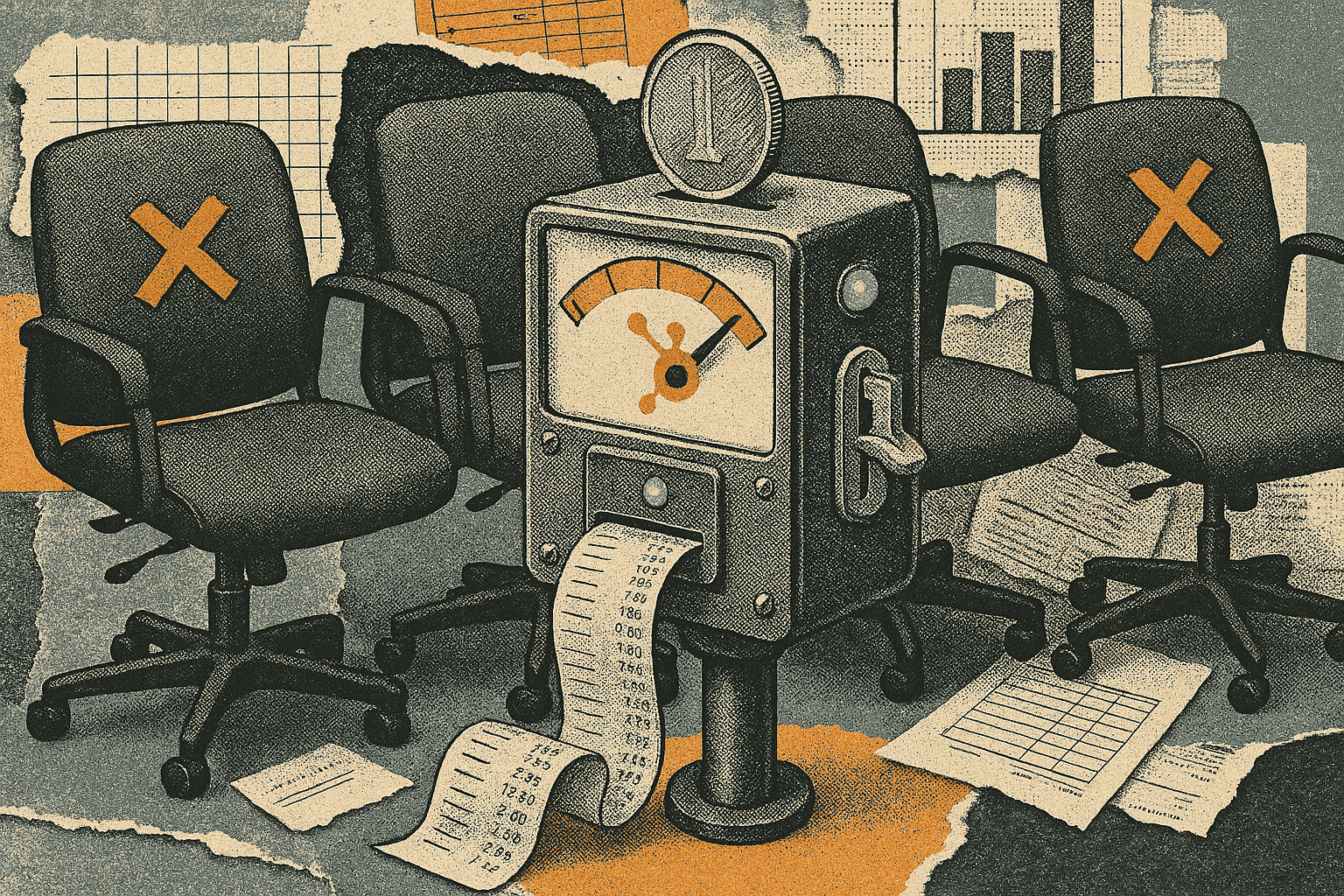
On April 14, HubSpot stopped charging for AI that doesn’t work. Its Customer Agent used to cost $1.00 every time it opened a support conversation. Now it costs $0.50, and only when it resolves one. The Prospecting Agent dropped its recurring per-contact fee and now bills $1.00 for each qualified lead it hands a salesperson, both changes spelled out in HubSpot’s own announcement.
Jon Dick, HubSpot’s chief customer officer, framed the old way as paying for a promise.
“Too often, that means paying for potential rather than performance. Outcome-based pricing removes that risk. You pay when it works, full stop.”
You bought marketing software by the seat for years. A fixed number, renewed on a schedule, indifferent to whether anyone logged in. That contract is coming apart. The bill is moving from the seat to the outcome, and the meter runs on your results.
HubSpot isn’t early to this. Sierra, the customer-service company Bret Taylor co-founded after leaving Salesforce, has priced by outcome from the start. It crossed $150 million in annual recurring revenue by February. Taylor’s argument is that software which finishes a job should get paid like a contractor, not a landlord.
“If you’re selling software that completes a job, what is the secular business model for that? Let’s pay for a job well done.”
Intercom’s Fin agent charges $0.99 per resolved conversation and nothing when it fails. Zendesk runs $1.50 to $2.00 per resolution. None of this is a HubSpot experiment. Usage-based billing climbed from about half of software companies in 2019 to 61% three years later, and Gartner expects more than 30% of enterprise software to carry an outcome-based component. The vendors that turned standalone marketing tools into platform features are now repricing those features by the result. It’s the next turn of the same stack consolidation that’s been shrinking martech.
Kyle Poyar writes the pricing newsletter Growth Unhinged for 75,000 readers, and he reads the shift as more marketing than math.
“Outcome-based pricing is a sales weapon more than a billing model.”
“Pay only when it works” is a strong line in a sales deck and a hard one to hold up at renewal. A customer who agreed to pay for wins starts re-litigating what counts as one. What buyers actually sign for, Poyar says, is the opposite of theoretical upside.
“Most buyers want budget certainty more than they want the theoretical upside.”
Jason Lemkin, the SaaStr founder, adds a second catch: the discount is temporary. When an agent resolves 65% of tickets, paying for only the 65% saves real money. When it resolves 90%, per-resolution and per-attempt come out to nearly the same bill.
“Per-resolution pricing will be a footnote for most categories.”
The economics under all of it are plain. A vendor can finally measure a discrete outcome, a resolved ticket or a qualified lead. That measurement is what lets it move the risk of a weak model off your budget and onto its own. An outcome is also a slippery thing to define. Who decides a support conversation was resolved, the customer or the agent that closed the thread? A lead is qualified by whose bar? The moment real money rides on the definition, both sides start arguing about the definition.
For a founder-marketer, the seat license had one underrated feature: you knew the number in advance. That predictability is the quiet thing every AI marketing budget was built on. Outcome pricing trades it for a bill that grows with your own success. Run 5,000 support conversations a month at HubSpot’s 65% resolution rate and the cheap $0.50 agent runs about $1,625, and it climbs every month your volume does. That unpredictability is what finance notices first. 64% of SaaS finance leaders call it their top worry with these models. Decagon’s research found 80% of buyers would rather pay a flat rate than gamble on outcomes. It’s the reason Salesforce, whose Agentforce runs about $2 a conversation for 18,500 customers, still bills by usage. That agent charges whether or not it solves anything.
So the price tag moved off the seat and onto the result. It reads like the buyer finally won. But the vendor still writes the definition of a result, and the meter still runs on your growth. Before you sign for outcomes, get the outcome defined in writing. Whoever owns that definition owns the bill.
Quoted in this story
- Jon Dick, Chief Customer Officer, HubSpot (source)
- Kyle Poyar, Founder, Growth Unhinged (source)
- Jason Lemkin, Founder, SaaStr (source)
- Bret Taylor, Co-founder, Sierra (source)
Want your perspective in coverage like this? Get quoted.
Sources
- HubSpot: HubSpot's Customer Agent and Prospecting Agent: Now you pay when the task is complete
- MarTech: HubSpot moves to outcome-based pricing for some Breeze AI agents
- SaaStr: HubSpot Switching AI Pricing From Per Use to Per Resolution. But Does It Really Matter?
- The Revenue Creator: Why hybrid pricing already won the AI era: Kyle Poyar (Growth Unhinged)
- Digital Applied: HubSpot vs Salesforce 2026: AI Features and Pricing
- Monetizely: The 2026 Guide to SaaS, AI, and Agentic Pricing Models
This story is part of our running coverage: the full picture →
Get Net Effect.
The net effect of AI on your marketing: the stories that matter, twice a week, in five minutes.